
Danantara Targets $20 Billion to $30 Billion for Indonesia's Industrial Projects
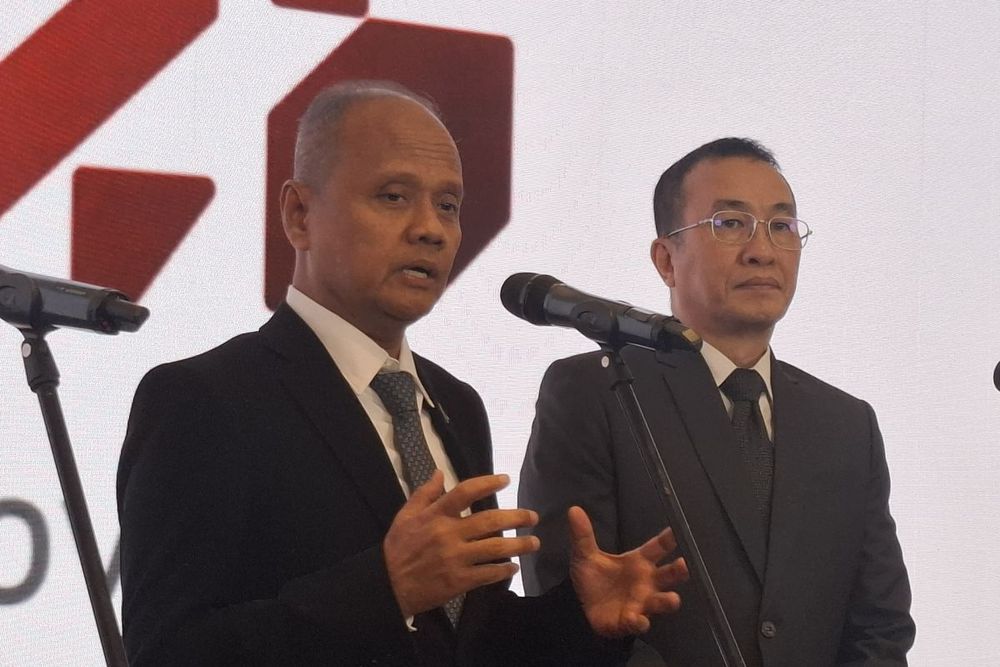
Danantara, Indonesia's investment management agency, is seeking $20 billion to $30 billion in strategic industrial investment over the next two to three years, with more than 40 projects in its pipeline. Chief Technology Officer Sigit Puji Santosa presented the plans in Jakarta on October 26.

A five-year industrial roadmap
At the C-Suite session of the Danantara Technology Innovation Investment Forum (DTIIF) 2026, Sigit said several projects had reached the feasibility-study and front-end engineering design (FEED) stages. The investment target is an ambition, not a total of secured commitments.
"If we can reach US$20 billion to US$30 billion within the next two to three years, that would be excellent. But we aim for even more," he said.
The projects fall within a five-year framework spanning six clusters: energy; food and health technology; infrastructure, mobility and telecommunications; defense, maritime and aerospace; advanced materials; and electronics, machinery, financial technology and semiconductors.
Danantara is giving priority to minerals, advanced materials and semiconductors. Its aim is to capture more value through downstream processing and advanced manufacturing instead of depending solely on raw material extraction.
Solar power, digital infrastructure and domestic medicines
The energy portfolio includes plans for nuclear power, conversion of coal into dimethyl ether (DME), electric vehicle (EV) battery supply chains and a 100-gigawatt (GW) solar program.
The solar ambition is substantially larger than the expansion set out in Indonesia's national electricity blueprint. In a March 2026 analysis, The Jakarta Post reported that the Long-Term Electricity Supply Business Plan (RUPTL) 2025–2034 called for about 17.1 GW of additional solar capacity by 2034.
As of that analysis, the 100 GW program was to start with a 13 GW phase focused on villages that already had electricity distribution infrastructure. Foreign direct investment commitments of $1.4 billion had been secured for development of a domestic solar panel factory by the end of 2026, with capacity of up to 50 GW. A prototype had also been installed in a village in Sumenep Regency, East Java.
For digital infrastructure, Danantara plans a data center with 1 GW of capacity, sovereign cloud computing, national artificial intelligence capabilities and six areas of semiconductor development. Its healthcare plans focus on expanding domestic medicine and vaccine production to reduce dependence on imported pharmaceutical raw materials, which supply nearly 94% of Indonesia's needs.
Danantara also plans to work with Danantara Asset Management on 10 smart cities. A dedicated technology corridor would connect the semiconductor, EV, defense and electronics industries.
Building partnerships and industrial capacity
Danantara intends to pursue the roadmap by strengthening existing state-owned enterprises (SOEs) and working with Indonesian and international businesses, universities and research institutions. Sigit said the agency was ready to create new domestic industries with strategic partners in fields where Indonesia does not yet have the necessary capabilities.
"We will go beyond signing memorandums of understanding (MoUs) and non-disclosure agreements (NDAs)," he said.
On October 26, the forum's opening day, Danantara signed an MoU with the Ministry of Finance; the Ministry of Higher Education, Science, and Technology; the Ministry of Industry; and the National Research and Innovation Agency (BRIN). According to Danantara Indonesia, the agreement seeks closer coordination among research agendas, talent development, industrial needs, funding mechanisms and strategic investment opportunities.
Indonesia's investment backdrop
The plans follow growth in Indonesia's downstream investment. The Ministry of Investment and Downstream Industry reported Rp480 trillion, or approximately $26.67 billion, in realized downstream investment during January–September 2026, up 11.3% from a year earlier.
Across the economy, realized investment for those nine months amounted to Rp1,539.2 trillion ($85.51 billion). That represented 75.4% of the government's annual target of Rp2,041.3 trillion ($113.41 billion). The investment generated an estimated 2.19 million jobs.
Jakarta forum leads toward December gathering
DTIIF runs October 26–28, 2026, at the Fairmont Jakarta, with more than 1,500 participants drawn from global innovators, technology executives, research institutions, SOEs, investors and scientists. Its theme is "Investing in Tomorrow: Advancing Technology, Innovation, and Sustainable Growth."
Danantara CEO Rosan Roeslani, who also serves as Indonesia's minister of investment, opened the forum. He described its goals as developing partnerships, mobilizing global capital and turning collaboration into concrete, sustainable initiatives.
The opening day's participants included 2025 Nobel economics laureate Peter Howitt and 2011 laureate Thomas J. Sargent, as well as representatives of international institutions, regulators, innovators and leading global companies.
According to Danantara Indonesia, DTIIF is part of the lead-up to the inaugural New Asia Forum, which the agency will hold in Bali on December 3–4, 2026, under the patronage of President Prabowo Subianto. That forum has its own target of $30 billion in investment commitments across eight strategic sectors. It is expected to bring together more than 1,000 leaders and over 100 speakers for more than 40 sessions.