
Indonesia launches barcode certification program to help MSMEs access modern retail networks
Trade Minister Budi Santoso announces partnership with GS1 Indonesia to provide barcode certification for 50 companies in initial phase, aiming to help small businesses penetrate the country's 50,000 minimarket outlets and reduce import dependence.

Indonesia launches barcode certification program to help MSMEs access modern retail networks
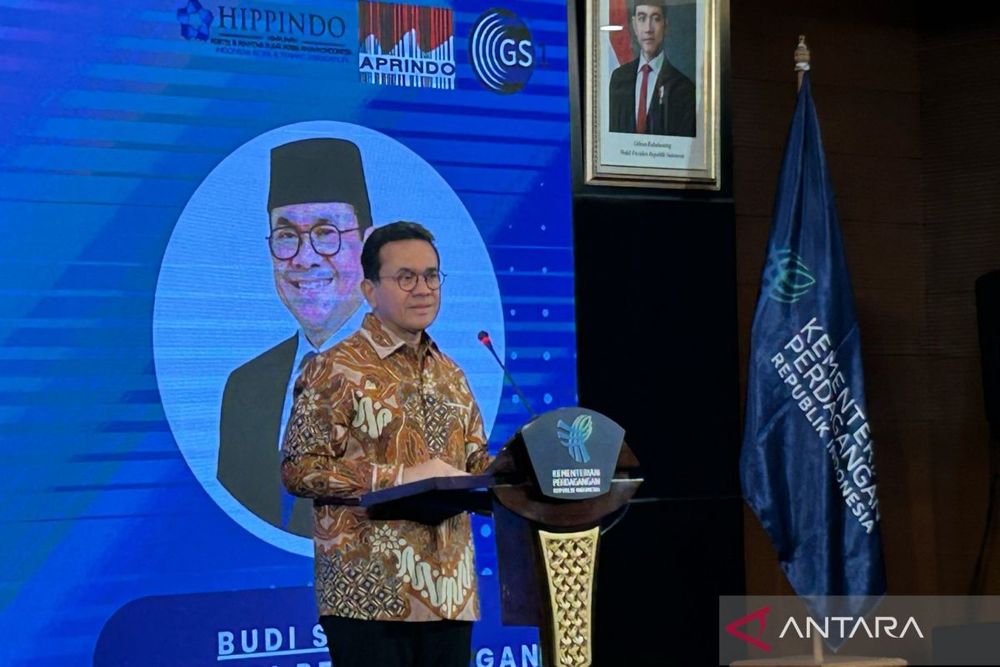
Indonesian Trade Minister Budi Santoso called on the country's micro, small and medium enterprises to adopt standardized product barcodes as a gateway to securing shelf space in modern retail chains during a government event in Jakarta on Tuesday.
The initiative targets Indonesia's approximately 66 million active MSMEs, which contribute 61 percent of national GDP and employ 117 million workers, representing about 97 percent of the total workforce. Despite this economic significance, Indonesian MSMEs contribute only 14 to 15 percent of total national exports, significantly trailing behind other ASEAN countries.
Speaking at the kick-off event for barcode certification facilitation for packaged food products, Santoso emphasized that barcodes represent a critical step in digitalization, enabling local goods to enter modern retail distribution channels more efficiently.
Government partnership with international standards body
The Trade Ministry has partnered with GS1 Indonesia, established in 1993 as the sole organization authorized by GS1 Global to issue barcode numbers in the country, to provide certification for local packaged food and beauty care products. Indonesian barcode numbers begin with the prefix '899', adhering to international standardization protocols.
The certification program will initially target 50 companies, with plans for continuous expansion to help more small businesses meet industry standards and integrate into modern retail chains.
Barcodes enable enhanced supply chain visibility, improved inventory management, and reduced errors through real-time tracking of products from production to point-of-sale. The technology helps prevent stockouts and overstock situations while generating cost savings for retailers and suppliers alike.
Massive retail network presents opportunity
Indonesia currently operates more than 50,000 minimarket outlets nationwide. The convenience store sector is dominated by Indomaret with approximately 23,000 outlets and Alfamart with around 19,000 to 21,000 outlets, together accounting for about 92 percent of the convenience store market. Alfamart announced plans in June 2026 to open 800 additional outlets, supported by capital expenditure of around IDR 500 billion.
Convenience stores and minimarkets hold the largest distribution channel share in Indonesia's retail market at over 42 percent. The overall retail market was valued at approximately USD 377 billion in 2025 and is projected to grow at 4.49 percent annually to reach USD 560 billion by 2034.
If all of these stores can be stocked with local products, it would be remarkable. If all local products can penetrate the domestic market, it means our reliance on imports will also decrease since local products can fulfill the demand.
Quality standards remain paramount
While emphasizing the importance of administrative compliance through barcode adoption, Santoso stressed that market access ultimately depends on product quality and competitiveness.
"If a product is uncompetitive or lacks quality, it cannot enter the market. Consumers have standards, and retail stores also have standards," Santoso said.
The barcode certification initiative forms part of a broader government strategy to boost MSME competitiveness. Digital adoption among Indonesian MSMEs reached 55.6 percent in 2026, though approximately 44 million out of 65 million MSMEs still lack access to formal financing from financial institutions.
Recent government efforts have shown promising results. Indonesia recorded USD 251 million in MSME export transactions through a government program in the first half of 2026, already surpassing the USD 134.87 million recorded for the entire year of 2025, with 60 to 70 percent being first-time exporters.
The Trade Ministry aims to leverage the barcode certification program to expand domestic market reach for small businesses while simultaneously reducing the country's dependence on imported goods by enabling local products to meet the quality and operational standards required by modern retail chains.