
Indonesia calls for concrete action to strengthen small-scale fisheries at global forum
At the FAO Committee on Fisheries meeting in Rome, Indonesia's Marine Affairs Minister emphasized the need for practical policies supporting small-scale fishers, who represent 90 percent of the nation's fishing workforce and drive national production.

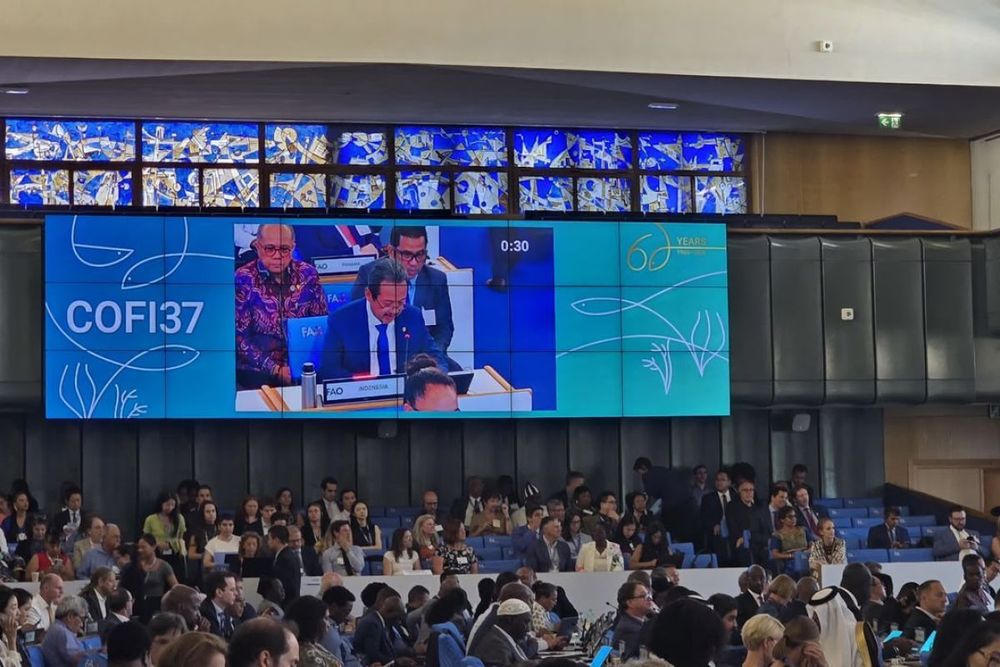
Indonesia calls for concrete action to strengthen small-scale fisheries at global forum
Indonesia pressed for meaningful support mechanisms for small-scale fishing communities during the 37th Session of the Food and Agriculture Organization Committee on Fisheries, the world's leading intergovernmental forum dedicated to fisheries and aquaculture. The five-day session, held in hybrid format from September 7-11, 2026, at FAO Headquarters in Rome, brought together member states to address critical issues facing the global fishing sector.
Marine Affairs and Fisheries Minister Sakti Wahyu Trenggono delivered a pointed message to the international community, stressing that verbal commitments to sustainable fisheries must translate into concrete programs with measurable impacts on coastal communities.
"As the world's largest archipelagic nation, Indonesia remains fully committed to sustainable fisheries that protect the ocean, strengthen food security, and improve the welfare of fishing communities," Trenggono stated during his address.
Indonesia's maritime geography spans over 17,000 islands, positioning the country as a major player in global fisheries discussions. The minister underscored that small-scale fishers constitute approximately 90 percent of Indonesia's fishing population and generate the majority of national capture fisheries output.
National action plan aligns with international framework
To safeguard these fishing communities, Indonesia has established a National Plan of Action for Small-Scale Fisheries in accordance with the FAO's Voluntary Guidelines for Securing Sustainable Small-Scale Fisheries. These guidelines, endorsed in 2014, represent the first international instrument dedicated entirely to the small-scale fisheries sector and were developed through an extensive consultative process involving over 4,000 representatives from governments, fishers, researchers, and stakeholders across more than 120 countries between 2010 and 2013.
Indonesia and the Philippines currently stand as the only Asian nations to have formalized such comprehensive action plans, demonstrating regional leadership on this issue.
The global significance of small-scale fisheries extends far beyond Indonesia's borders. Worldwide, small-scale fisheries employ approximately 90 to 94 percent of all people working in the capture fisheries sector, with estimates suggesting between 90 million and over 113 million people depend on this livelihood. These operations account for at least 40 percent of global fisheries catch, providing essential nutrition to billions of people. Women comprise approximately 40 to 45 percent of those engaged in small-scale fisheries globally, with 45 million women participating in various capacities including subsistence fishing.
Village-level intervention model
Trenggono outlined how Indonesia transforms national policy into local impact through the Kampung Nelayan Merah Putih program, which serves as a practical framework for community-level intervention. The initiative focuses on modernizing coastal villages through infrastructure development, strengthening local cooperatives, expanding market access, and building local value chains.
"KNMP is an example of how Indonesia's commitment to small-scale fisheries is translated from national policy into concrete action at the community level," the minister explained.
The Indonesian government successfully established 100 integrated marine and fisheries villages by 2025 and has set an ambitious target to expand the initiative to 5,000 locations nationwide by 2029.
Blue economy alignment
In his closing remarks, Trenggono commended the FAO's Blue Transformation agenda, which emerged from the 2021 COFI Declaration for Sustainable Fisheries and Aquaculture. The agenda pursues three primary objectives: sustainable aquaculture expansion, effective fisheries management, and upgraded value chains. Trenggono noted that this framework aligns with Indonesia's broader blue economy policy, which seeks to balance environmental sustainability, food security, and community welfare.
The minister urged FAO member states to move beyond declarative policy statements and prioritize programs that directly strengthen coastal livelihoods while safeguarding marine ecosystems. His intervention at the forum, which also featured celebrations marking the 10th anniversary of the Port State Measures Agreement targeting illegal fishing, positioned Indonesia as an advocate for practical implementation over abstract commitments in global fisheries governance.