
Indonesia's Free Meals Program Has Created 1.3 Million Jobs, Minister Says
Indonesia's Free Nutritious Meals (MBG) program has provided employment for 1.3 million people from poor households, Coordinating Minister for Community Empowerment Muhaimin Iskandar said on October 27. He cited the state-funded program in calling for the government to protect empowerment budgets and make economic opportunity a priority in public spending.

Employment and the supply chain
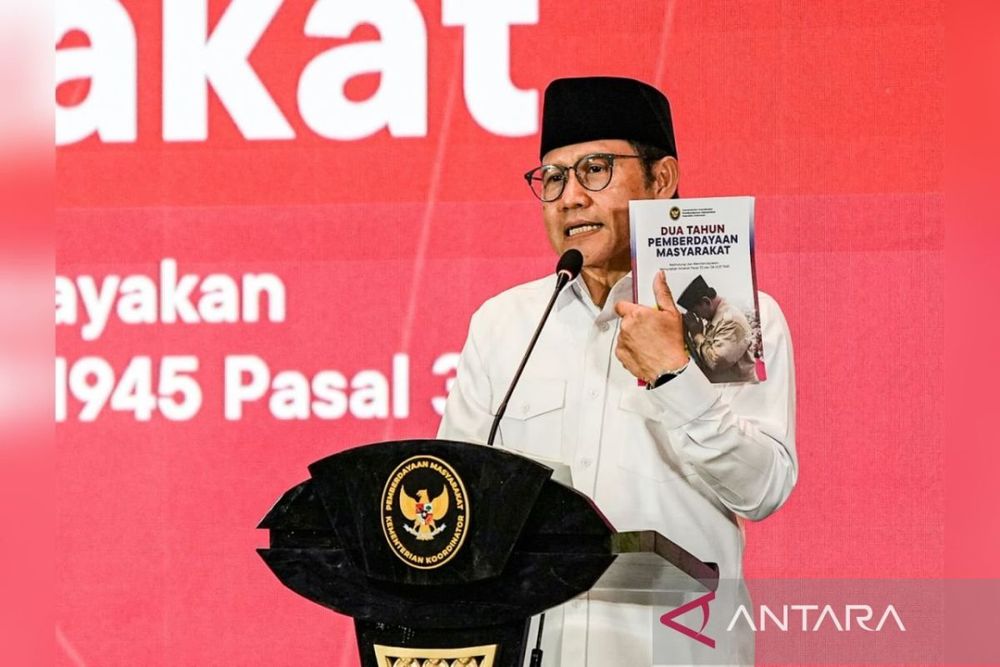
Speaking in Jakarta, Muhaimin singled out the National Nutrition Agency (BGN) as the strongest example of how state funding can support jobs and businesses. "It has built an economic ecosystem in a very short time, providing jobs for 1.3 million poor people," he said.
Muhaimin put the number of new business operators joining MBG's supply chain at no fewer than 148,500. He also said about 63,100 micro, small, and medium enterprises (MSMEs) were supplying the program.
Earlier BGN figures, dated May 22, 2026, recorded 1.28-1.29 million workers across 29,225 MBG kitchens. The agency counted 142,387 suppliers at that point, including 59,921 MSMEs, 13,306 cooperatives, 1,410 village-owned enterprises (BUMDes), and 157 joint village-owned enterprises (BUMDesma).
BGN's estimates for an individual kitchen illustrate the volume of supplies involved. Preparing 3,000 portions requires about 200 kilograms of rice a day, or roughly 4.8 tons a month. A kitchen serving chicken twice a week needs around 2,800 chickens monthly. Daily milk requirements are about 450 liters, based on 150 milliliters per serving.
A push to protect empowerment budgets
Muhaimin urged other ministries and agencies to use MBG as a model for spending that supports employment, productivity, and community self-reliance. He argued that empowerment should be built into development planning and implementation rather than treated as an extra.
"I ask the Minister of Finance to stop cutting empowerment budgets. Empowerment must be at the heart of our state budget," he said.
He also urged the government to involve more groups in empowerment initiatives and extend their geographic coverage. Better connections among programs, he said, could broaden access to work, education, and business opportunities across the country, directing public spending toward tangible economic benefits.
"Empowerment should not stop at assisting. It must also create opportunities for people to work, develop businesses, and improve their well-being sustainably," Muhaimin said.
Funding allocations and spending
The government's original 2026 budget allocation for MBG was Rp335 trillion, about $20.7 billion, with a target of roughly 82.9 million beneficiaries. In May, Finance Minister Purbaya Yudhi Sadewa announced a reduction in the ceiling to Rp268 trillion. He said President Prabowo Subianto had ordered the cut to improve spending efficiency.
In its September 30 spending update, the Government Communications Agency (Bakom) reported a Rp229 trillion allocation, equivalent to $12.69 billion. It said MBG had spent Rp153.2 trillion, or $8.49 billion, from the state budget by that date, representing 66.9% of that allocation.
Program reach and kitchen oversight
MBG began on January 6, 2025. By May 2026, it had served 374,175 schools and delivered more than 8.3 billion meal portions, according to Bakom.
By September 30, 2026, the program was reaching more than 57 million beneficiaries in 38 provinces through 27,486 Nutrition Fulfillment Service Units (SPPGs), Bakom Deputy Kurnia Ramadhana said.
Kurnia also said BGN had temporarily halted operations at 1,276 MBG kitchens lacking hygiene and sanitation certificates as of September 30. The suspensions were part of tighter food-safety standards.