
Navy deploys advanced survey vessel KRI Canopus as Virgo Transport 8 search enters third day
Indonesia's largest survey vessel will join underwater search operations for 129 missing passengers after bad weather prevented divers from operating in the Java Sea accident site.

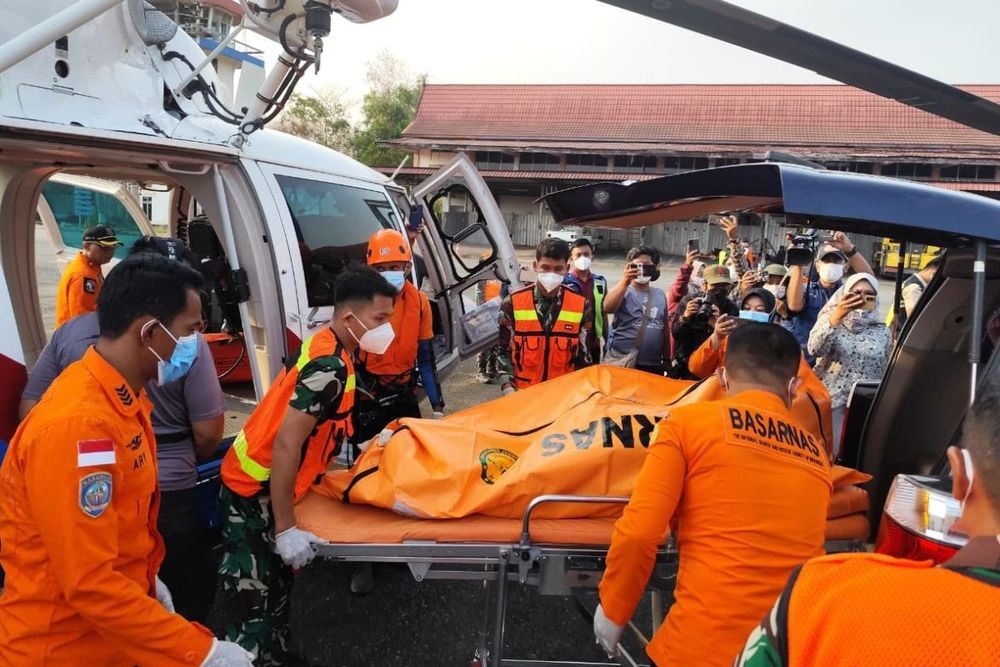
KRI Canopus to join search for Virgo Transport 8 victims: Basarnas
Indonesia's National Search and Rescue Agency (Basarnas) announced that the navy's advanced survey vessel KRI Canopus will arrive Tuesday morning to lead underwater search efforts for victims of the Virgo Transport 8 ferry accident, after adverse weather conditions grounded diving operations for a second consecutive day.
Basarnas Chief Mohammad Syafii told journalists at Banjarmasin's Trisakti Port on Monday evening that divers from the Indonesian Navy's Kopaska special forces unit, specialist diving teams, and Basarnas personnel remained unable to deploy due to unsafe weather conditions in the Masalembu waters of the Java Sea.
Advanced Technology Deployed
The 105-meter KRI Canopus, commissioned in February 2026 as Indonesia's largest hydro-oceanographic survey vessel, brings specialized technology crucial for the search operation. The 3,400-ton vessel is equipped with autonomous underwater vehicles, remotely operated vehicles, and unmanned aerial vehicles capable of mapping the seabed at depths of up to 11,000 meters.
"KRI Canopus is en route and will arrive on Tuesday morning to support underwater searches using its available technology as an alternative to diving, which has been limited by weather," Syafii said.
The vessel's multibeam echo sounder and remotely operated vehicle will enable search teams to detect and locate victims and the sunken vessel on the seabed.
The deployment represents a significant technological escalation in the search effort. As Indonesia's first naval platform capable of supporting submarine rescue operations, KRI Canopus is specifically designed to detect distress signals and locate objects underwater, capabilities that prove essential given the challenging conditions facing human divers.
Current Status of Victims
By 10 p.m. local time Monday, authorities confirmed 114 victims had been located, including 108 survivors and six deceased, leaving 129 people still missing from the 243 passengers and crew aboard when the vessel lost contact.
Of those found, 86 had reached Trisakti Port in Banjarmasin, comprising 85 survivors and one deceased victim. A second body was evacuated to Syamsudin Noor Air Base in Banjarbaru and handed over to the National Police's disaster victim identification team for medical examination. One survivor was airlifted by Basarnas helicopter to the air base, while 26 others were being transported to Trisakti Port, including 22 survivors and four deceased.
The Accident
The ferry was traveling the 263 nautical mile route from Surabaya to Banjarmasin, a journey that typically takes 12 hours under normal conditions, when it lost contact at approximately 2 a.m. local time Sunday in the Masalembu waters, located roughly halfway between Madura and Borneo in one of the region's busy shipping lanes.
The accident occurs in waters that have witnessed significant maritime tragedies historically. The Java Sea, which covers approximately 320,000 square kilometers with an average depth of 46 meters, was the site of the 1981 Tampomas II sinking, when around 600 people died according to some estimates in one of Indonesia's deadliest maritime disasters.
Maritime Safety Challenges
Maritime safety remains a persistent challenge for Indonesia's archipelagic nation of more than 17,000 islands, where ferries form a vital link in the country's transport network. According to the National Transportation Safety Committee, 250 maritime accidents were recorded in Indonesia between 2003 and 2025, with the majority involving vessel fires and sinkings.
The KRI Canopus can operate continuously at sea for up to 60 days and supports multiple mission types beyond its primary survey role, including search and rescue operations, maritime patrols, and mine warfare-related tasks. Kopaska, the Indonesian Navy's premier frogman and underwater demolition unit established in 1962, remains on standby to resume diving operations once weather conditions permit safe underwater work.
Search and rescue teams continue expanding the operation's scope as they race against time to locate the missing passengers in the third day of intensive search efforts across the Java Sea accident zone.