
Indonesia's consumer watchdog calls for technology-driven maritime safety overhaul
Following the Virgo Transport 8 ferry accident that left six dead and 120 missing, the National Consumer Protection Agency is urging the government to implement technology-based preventive systems for sea travel, emphasizing real-time monitoring and early warning capabilities.

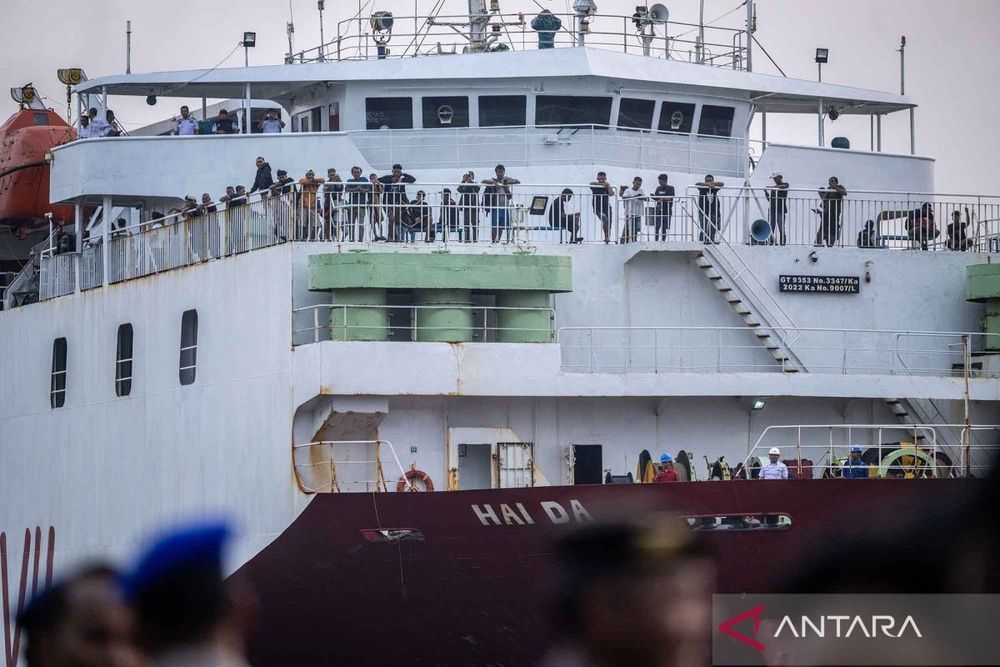
Consumer agency urges tech-based prevention of sea transport accidents
Indonesia's National Consumer Protection Agency (BPKN) has called on the government to adopt advanced technology systems to prevent maritime accidents, following the listing of the Virgo Transport 8 ferry in the Java Sea on Sunday, Sept. 13, which has claimed six lives with 120 people still missing.
"Technology must be utilized to save lives. We need to move from a reactive system to a tech-based preventive approach to safety," BPKN Chairman Mufti Mubarok said on Monday. The agency, established under Law No. 8 of 1999 on Consumer Protection, has authority to provide policy recommendations to the government on consumer rights across various sectors including transportation.
Persistent maritime safety challenges
The call comes as Indonesia grapples with persistent maritime safety challenges across its more than 17,000 islands, where ferries serve as essential transport links connecting communities, businesses, and tourism destinations throughout the archipelago. Data from the National Transportation Safety Committee shows the country has averaged 21 maritime accidents annually from 2018 to 2022.
Mubarok outlined how technology enables real-time monitoring of weather and wave conditions, tracking ship positions, assessing vessel stability, issuing early warnings, and maintaining emergency communications. The approach represents a shift from responding to accidents after they occur to preventing them through predictive capabilities.
Search and rescue operations continue
Of the 234 people aboard the Virgo Transport 8, search and rescue authorities have located 114 individuals as of the latest reports, with operations continuing in the Java Sea. The ferry was traveling from Surabaya, East Java, to Banjarmasin, South Kalimantan, on one of Indonesia's busiest domestic ferry routes, which carries migrant workers, traders and families between Java and the coal- and palm-oil-producing provinces of Kalimantan.
The BPKN chief described the incident as an opportunity to comprehensively evaluate Indonesia's maritime safety framework. Research indicates that vessel accidents in the country stem from multiple causes: 43.67% from human error, 32.37% from natural factors, and 23.94% from technical factors.
"If a vessel has been notified of bad weather, it must carefully decide whether to proceed, delay departure, or alter the route. Operational factors must not take precedence over safety," Mubarok stated, emphasizing that technology adoption must be accompanied by strong oversight and reliable decision-making by operators and maritime authorities.
Comprehensive safety audits needed
The agency stressed the importance of comprehensive audits covering ship maintenance, stability, passenger and load capacity, cargo distribution, manifest systems, crew competencies, safety equipment, and procedures for extreme weather conditions. These concerns are particularly relevant given Indonesia's dense ship traffic and challenging navigational conditions, as well as uneven technological uptake among vessels and limited seafarer skills in adopting modern navigation systems.
Indonesia has already invested in maritime surveillance infrastructure, including a $57 million U.S.-funded Integrated Maritime Surveillance System featuring 18 coastal surveillance stations and four command centers, along with a €167 million maritime surveillance project that commenced in 2025. These initiatives demonstrate existing capacity for technology-based maritime monitoring that could be adapted for passenger safety applications.
Regional context of ferry disasters
The incident occurs against a backdrop of recent ferry disasters in Southeast Asia. In August 2026, an Indonesian ferry fire killed at least five people with 41 missing, while a Philippines ferry fire in September claimed at least 76 lives. The Java Sea itself has a history of major maritime accidents, including the 1981 sinking of the Tampomas II.
Mubarok emphasized that findings from the investigation launched by the National Transportation Safety Committee (KNKT)—an independent institution responsible to the President that investigates safety deficiencies across aviation, maritime, railway and road transportation—should drive immediate improvements to the national safety system.
"System weaknesses must be rectified immediately once discovered. We cannot afford to let investigation recommendations end up being a mere document," he said, adding that strengthening safety systems is essential to fulfilling the rights of sea transport users as consumers.