
Indonesia and Australia renew anti-narcotics cooperation until 2031 amid vape trafficking concerns
The Indonesian National Narcotics Agency and Australian Federal Police have extended their law enforcement partnership for five years, focusing on transnational drug networks and emerging threats like drug-infused vaping products.

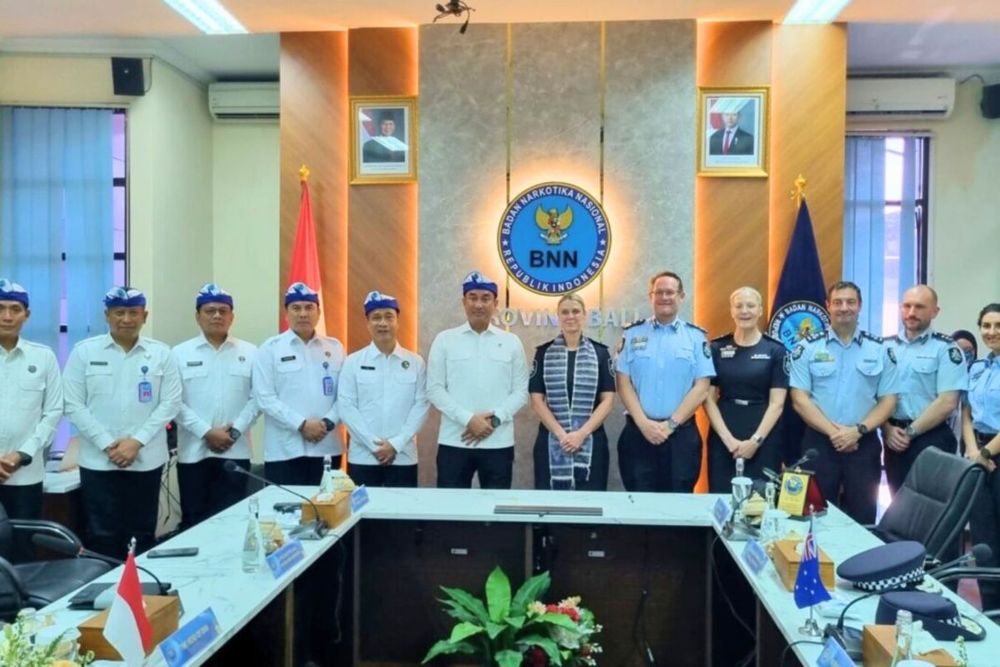
Indonesia and Australia renew anti-narcotics cooperation until 2031 amid vape trafficking concerns
Indonesian and Australian law enforcement agencies have renewed their commitment to combat cross-border drug trafficking, signing a five-year extension to their cooperation agreement that will run through 2031. The memorandum of understanding between the Indonesian National Narcotics Agency (BNN) and Australian Federal Police (AFP) was formalized in Bali on September 22, marking a continuation of bilateral efforts that first began years ago.
BNN Chief Commissioner General Suyudi Ario Seto and AFP Commissioner Krissy Barrett, who became the first woman to lead Australia's federal police force when she assumed office on October 4, 2025, signed the agreement addressing illicit narcotics, psychotropic substances and precursor trafficking. The previous cooperation agreement had expired in March 2021 and was extended in October of that year.
The renewed partnership comes as Indonesia grapples with a persistent drug abuse challenge. While prevalence declined from 3.66 million users in 2021 to 3.33 million in 2023 among the 15-64 age group, recent data shows the problem has resurged, with 2026 figures indicating more than four million people affected—representing above 2 percent of the population.
Vaping products emerge as new trafficking method
A primary focus of the extended cooperation is addressing the growing use of electronic cigarettes as a medium for drug distribution. BNN intelligence has identified organized networks increasingly processing cannabis buds into liquid tetrahydrocannabinol (THC) extracts for vape cartridges, targeting urban lifestyle markets.
Recent regional incidents underscore the threat. In July 2026, Malaysian police dismantled a syndicate trafficking vape cartridges containing drug-laced liquid to Indonesia, arresting eight foreign nationals and seizing drugs worth RM152,400. The operation revealed that traffickers were using village houses in remote areas to process and package drugs before shipping them by sea.
Research from the Asia-Pacific region reveals the complexity of the vape drug threat extends beyond cannabis. A study of 496 e-liquid samples seized in Eastern Taiwan between January and July 2025 found that 80.8 percent tested positive for psychoactive substances, with 87 percent of positive cases containing etomidate and 35.4 percent showing polydrug mixtures. THC appeared in only 2 percent of cases.
To strengthen its regulatory approach, BNN plans to study Australia's vaping frameworks and enforcement practices. Since July 1, 2024, Australian regulations have required all vapes and vaping products, regardless of nicotine content, to be sold only in pharmacies for smoking cessation or nicotine dependence management purposes.
Enforcement achievements and ongoing challenges
Indonesia's anti-narcotics efforts have yielded significant results in recent years. From October 2024 through July 2026, BNN seized 12.3 tons of narcotics, preventing an estimated 48.3 million people from potential exposure and halting approximately Rp16.5 trillion (about US$896 million) in potential economic activity.
Over the past year, Indonesian authorities working with military and police forces dismantled 59 drug trafficking networks, including seven international syndicates, and intercepted more than 200 tons of illegal narcotics with an estimated street value of 29 trillion rupiah. In 2025, the country conducted its largest drug seizure in history, confiscating 2 tons of methamphetamine off the coast of Riau Islands.
Despite these successes, Indonesia remains a key transit and destination point for synthetic drugs in the region. The most commonly abused substances include marijuana and methamphetamine, followed by ecstasy, ketamine, cocaine, and prescription drug misuse. Amphetamine-Type Stimulants (ATS), such as crystal methamphetamine and synthetic cannabinoids, pose particularly severe threats.
Suyudi emphasized that the borderless nature and technological sophistication of modern drug networks require adaptive and coordinated international responses.
Evolving modi operandi, the exploitation of technology, and the use of various transnational routes by organized crime networks present challenges that must be met through close inter-agency cooperation.
Under the extended agreement, BNN and AFP will expand cooperation on real-time intelligence sharing about syndicates, direct operational coordination for interdiction efforts, and joint capacity-building and specialized training programs. Suyudi said the framework provides a foundation for dismantling cross-border drug networks and protecting the public, while urging government agencies and civil society to remain vigilant against emerging threats.