
Prabowo emphasizes self-reliance, Global South unity at BRICS Summit
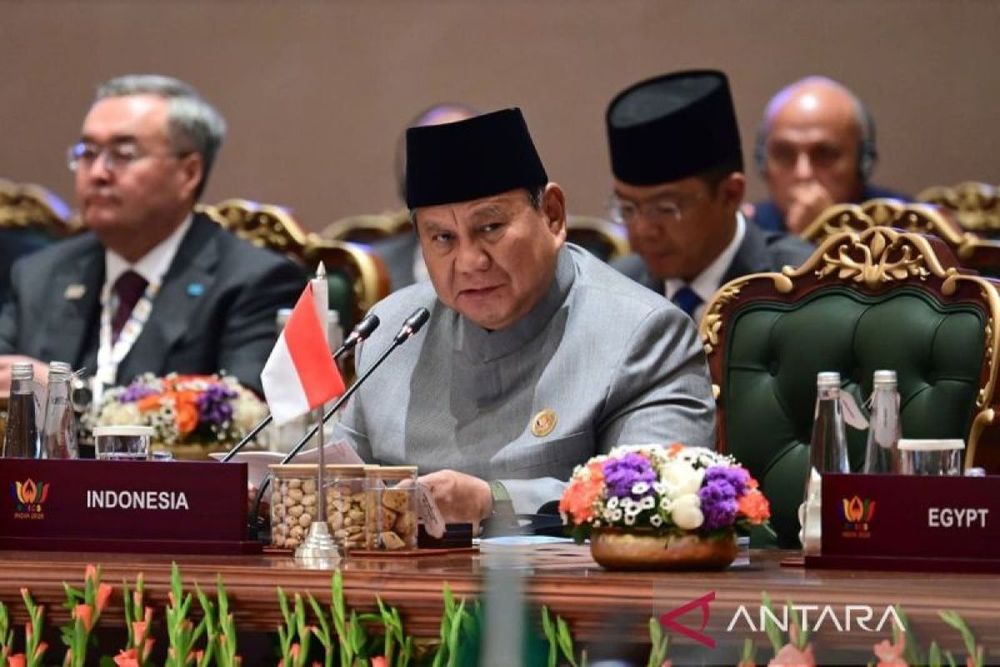
Indonesian President Prabowo Subianto delivered three core messages at the 2026 BRICS Summit in New Delhi, calling for national resilience, strengthened Global South cooperation, and concrete collaboration among bloc members representing nearly half the world's population.
Prabowo emphasizes self-reliance, Global South unity at BRICS Summit
Indonesian President Prabowo Subianto emphasized national self-reliance, Global South unity, and enhanced cooperation among BRICS nations during a restricted session at the 18th BRICS Summit in New Delhi on Saturday, according to Cabinet Secretary Teddy Indra Wijaya.
Speaking at the session titled "Inclusive Global Governance and Strengthening Multilateralism," the president outlined Indonesia's vision for the bloc, which now represents approximately 49.5 percent of the global population and accounts for around 41 percent of global GDP when measured at purchasing power parity.
The summit, held under the theme "Building for Resilience, Innovation, Cooperation and Sustainability," marks 20 years since BRICS was established. India is hosting the gathering for the fourth time, having previously chaired the organization in 2012, 2016, and 2021.
National Self-Reliance and Resilience
President Prabowo's first message stressed the critical importance of national self-reliance and resilience, particularly in meeting fundamental public needs. "Food, energy, and educational security are not merely domestic issues but serve as Indonesia's foundation for independently shaping its national interests and development trajectory," Teddy stated in a written statement released Monday.
Strengthening Global South Unity
The president's second message called for strengthening unity among Global South nations. Citing the proverb "United we stand, divided we fall," Prabowo recalled the spirit of the 1955 Asian-African Conference held in Bandung, Indonesia. That historic gathering brought together 29 countries representing 54 percent of the world's population at the time and established principles of cooperation that later influenced movements like the Non-Aligned Movement.
"Global South nations now stand on an equal footing to fight for their own interests and future," Teddy said, noting that the Asian-African Conference spirit has regained relevance as developing nations play an increasingly vital role in global geopolitics and the world economy.
Harnessing BRICS Potential
The president's third message highlighted the immense potential of BRICS, which currently comprises 10 full member countries including Brazil, Russia, India, China, South Africa, Egypt, Ethiopia, Iran, United Arab Emirates, and Indonesia. The bloc has also welcomed 10 partner countries, including Malaysia, Thailand, Vietnam, and several other nations.
"This strength must be turned into concrete cooperation: strengthening food and energy security, connecting markets, capital, technology, resources, and expertise, as well as unlocking greater development opportunities for developing nations," Teddy said.
Indonesia's BRICS Membership
Indonesia officially joined BRICS as its 10th full member in January 2025, becoming the first Southeast Asian country to achieve full membership in the bloc. President Prabowo prioritized joining BRICS shortly after entering office in October 2024, marking a significant policy shift from his predecessor Joko Widodo, who had been hesitant to join due to concerns about Indonesia's non-alignment policy.
Advocating for Global Governance Reform
Beyond the three core messages, President Prabowo advocated for a more just and inclusive global governance system while keeping the United Nations at the center of the world's multilateral architecture. "The UN must remain at the center of the multilateral system, but it needs to be strengthened to become more representative, responsive, and capable of delivering concrete results for the global community," Teddy added.
The cabinet secretary affirmed that through its BRICS membership, Indonesia continues to actively promote a more just, equitable, and peaceful global order for all nations. The bloc's institutional framework includes the New Development Bank, founded in 2014 to provide developmental funds to countries as an alternative to the World Bank and International Monetary Fund.
India's 2026 chairship has generated extensive engagement, with over 400 meetings and activities held across 30 cities throughout the year, involving ministers, parliamentarians, agency heads, officials, experts, businesses, and civil society representatives across key areas of cooperation including agriculture, technology, and finance.