
Poaching and Habitat Loss Threaten Javan Rhinos Alongside Natural Disasters
Human pressures are preventing Javan rhinos from recovering, Padjadjaran University environmental law lecturer Yulinda Adharani told Kompas.com on November 17. While eruptions and tsunamis threaten the species' only remaining habitat, she pointed to poaching and land conversion as major threats to its survival.

Poaching losses and disputed population counts
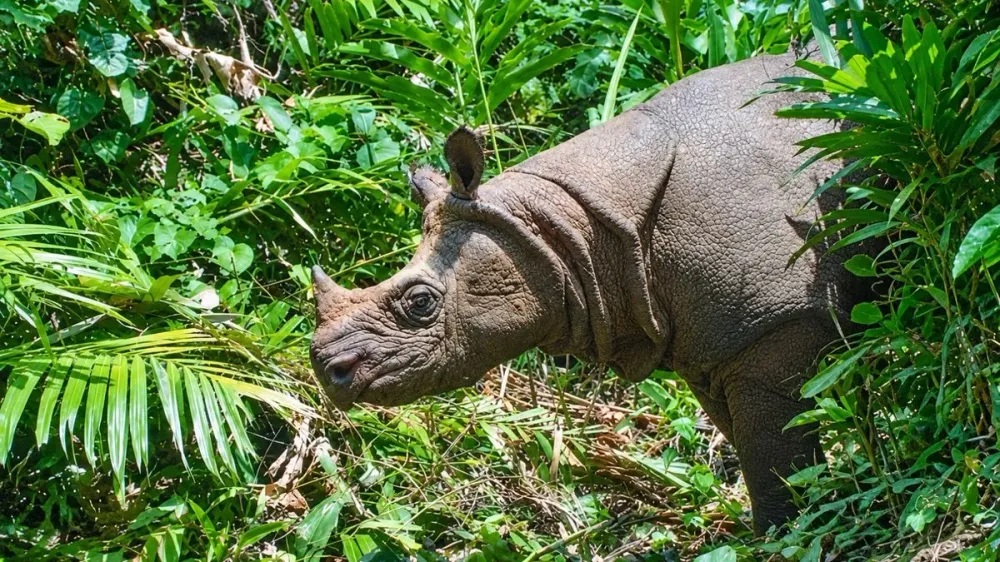
Court rulings established that two poaching groups killed 26 Javan rhinos between 2019 and 2023, Yulinda said. The IUCN SSC Asian Rhino Specialist Group and the International Rhino Foundation's State of the Rhino 2026 report put that loss at roughly one-third of the estimated population, or about 33 percent.
The number still alive remains disputed. As of February 2026, the specialist group estimated fewer than 50 surviving animals, all in Indonesia's Ujung Kulon National Park. Indonesia's Ministry of Forestry puts the figure at 87 to 100.
A 2023 investigation by Indonesian environmental group Auriga Nusantara partly explains the gap: Official counts still included rhinos that camera traps had not recorded for years, some of which were later confirmed dead.
The species formerly inhabited parts of both mainland and island Southeast Asia. According to the specialist group, the killing of Vietnam's last Javan rhino in 2010 marked its disappearance from the Asian mainland.
Prison sentences and financial investigations
In February 2025, a court in Pandeglang, Banten, handed a poaching gang's mastermind a 12-year prison term and sentenced five co-conspirators to 11 years each. Each also received a fine of Rp 100 million, about $6,135, with three additional months in prison if it went unpaid. Ujung Kulon park chief Ardi Andono described the sentences as the highest available for poaching in Indonesia.
Yulinda said Indonesia now has stronger legal tools for prevention and enforcement. Law Number 32 of 2024 sets a three-year minimum prison term for wildlife trade and extends liability to those behind the crimes, potentially including corporations, instigators and beneficiaries. Additional penalties can require ecosystem restoration and wildlife rehabilitation.
She also called for investigators to follow the money behind rhino-horn trafficking, which she described as organized crime.
Habitat protection and community involvement
Yulinda identified forest conversion for mining, plantations and infrastructure as another source of pressure on wildlife. Such clearing removes habitat and breaks the remaining areas into fragments.
She called for stronger zoning rules, credible environmental approvals incorporating environmental impact assessments, known as AMDAL, and enforcement inside conservation areas. The assessments, she said, must be more than a formality.
Conservation also needs the participation of people living nearby. Yulinda said communities that regard wildlife only as a burden can be unwilling to help protect it. "This necessitates mitigation, compensation, and genuine involvement of surrounding communities, rather than just asking them to safeguard wildlife," she said.
Disease and inbreeding
Competition from other species, particularly invasive species, and disease can also put wildlife populations under pressure, Yulinda said. As populations shrink, inbreeding becomes another risk.
"For populations that are very small, just one outbreak can be fatal. Therefore, rigorous biosecurity and routine health monitoring of wildlife are necessary," she said.
Ministry of Forestry studies cited in the International Rhino Foundation's State of the Rhino 2026 report found a potentially unhealthy inbreeding rate of 58.5 percent among Javan rhinos. The report also cites a Population Viability Analysis forecasting that the species could become extinct within the next five decades.
Volcanic risk at the last refuge
Natural disasters remain a concern at Ujung Kulon. Mount Anak Krakatau, about 50 kilometers from the park, began erupting on September 4, 2026. Mongabay reported that Ardi said on September 7 that vibrations and noise had barely affected the habitat and the rhinos remained safe. Conservationists identified a tsunami as the main concern.
Yulinda drew a distinction between recovery after a natural disaster and recovery under continuing human pressure. Nature has mechanisms to recover from disasters, she said, but human-caused problems can prevent populations from rebounding.
A relocation proposal and a recorded birth
Indonesia's first attempt to relocate a Javan rhino within Ujung Kulon ended with the animal's death in November 2025. Musofa, a male, died days after his transfer to the Javan Rhino Study and Conservation Area. A necropsy identified a severe parasitic infection and chronic health problems.
In November 2026, the government floated a separate proposal to move some rhinos from Ujung Kulon in Banten to Alas Purwo National Park in East Java. Hashim Djojohadikusumo, the president's special envoy for climate and energy, presented the plan at COP31 in Antalya, Türkiye.
The Ministry of Forestry cautioned that Alas Purwo might not be suitable and said scientific research and a comprehensive assessment were needed. Daniel Johan, a member of the Indonesian House of Representatives' Commission IV, and Pandeglang Deputy Regent Iing Andri Supriadi opposed the move.
Meanwhile, the Ministry of Forestry announced a birth on November 16, 2026. A camera trap in Ujung Kulon had recorded a calf wallowing with its mother, Desy, at about 9:35 p.m. on October 10. It was her fifth calf in eight years.