
Indonesia charts forestry investment path to achieve climate targets and community welfare
Deputy Forestry Minister Rohmat Marzuki announces National Investment Plan for Production and Protected Forests 2026–2030, targeting net emissions reduction, expanded social forestry, and sustainable economic growth through strategic forest management.

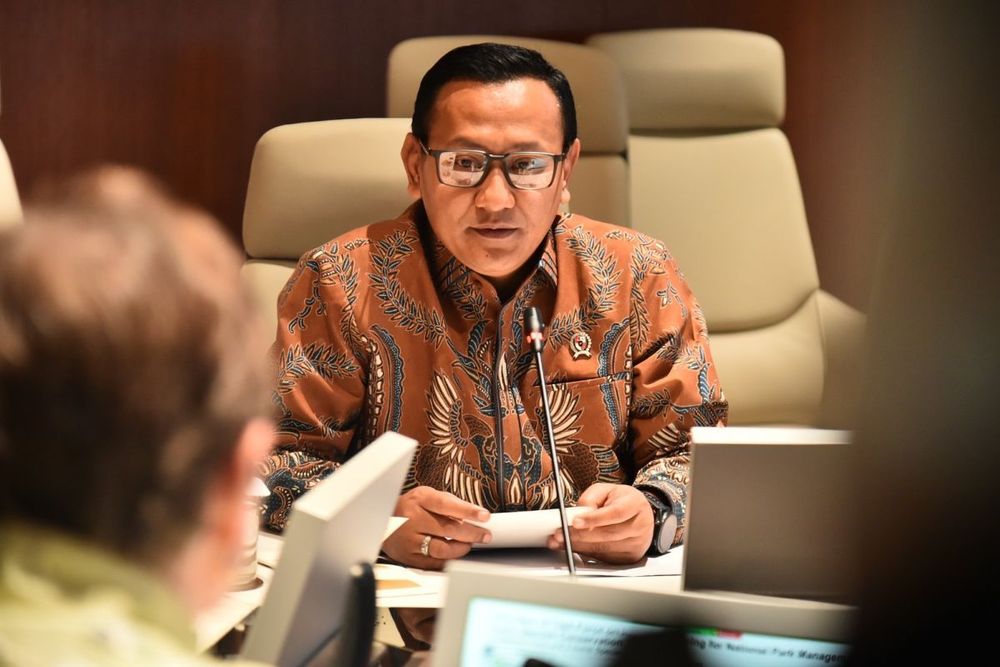
Protected, production forests vital for sustainability, welfare: Govt
Indonesia's Deputy Forestry Minister Rohmat Marzuki announced on Friday that the country's production and protected forests form the cornerstone of achieving the FOLU Net Sink 2030 target while improving the livelihoods of millions of Indonesians. The minister emphasized that forest management must be carefully planned, measurable, and deliver tangible environmental, economic, and social benefits.
The announcement comes as Indonesia manages over 120 million hectares of national forest estate, with 66.7 million hectares classified as production forests and 29.1 million hectares as protected forests. Together, these areas represent 82 percent of the country's total forest resources and are central to the government's climate commitments.
The ministry's Directorate General of Sustainable Forest Management, supported by the Multistakeholder Forestry Programme (MFP) Phase 5, has prepared the National Investment Plan for Production and Protected Forests 2026–2030. The MFP, a UK-Indonesia partnership that has strengthened forest governance and tackled illegal logging since 2000, launched its fifth phase in February 2026.
Legal framework and climate commitments
The FOLU Net Sink 2030 target was formalized through Decree of the Minister of Environment and Forestry No. 168/MENLHK/PKTL/PLA.1/2022, representing a 60 percent reduction scenario in national greenhouse gas emissions through forestry and land use sectors. This sector is projected to contribute nearly 60 percent of Indonesia's total emissions reduction target under the country's Nationally Determined Contribution.
Indonesia has strengthened its climate ambition over time, increasing its unconditional emissions reduction target from 29 percent to 31.89 percent in its Enhanced NDC submitted in September 2022, while the conditional target rose from 41 percent to 43 percent below business-as-usual scenarios.
These targets address substantial environmental challenges. Indonesia, home to the world's third-largest tropical rainforest, has experienced forest loss of 30.8 million hectares from 2001 to 2023, representing a 19 percent decrease since 2000 and resulting in 22.2 gigatons of CO2 equivalent emissions.
Declining deforestation and rehabilitation progress
Marzuki noted that national deforestation rates have declined from 462,000 hectares in 2019 to 175,000 hectares in 2024. Meanwhile, forest and land rehabilitation reached 217,974 hectares in 2024, contributing toward the broader target of rehabilitating 12 million hectares of degraded land. As part of these restoration efforts, the government established a 2 million hectare peatland restoration target by 2030, with the Peatland Restoration Agency focusing on seven priority provinces since its establishment in 2016.
According to Marzuki, the National Investment Plan translates Indonesia's Nationally Determined Contribution, the National Forestry Plan, and the FOLU Net Sink 2030 target into concrete actions with measurable outcomes. The plan identifies four main objectives: identifying priority interventions, estimating funding needs and expected carbon benefits, mapping stakeholders' roles, and preparing implementation-ready programs.
Production and protected forest strategies
In production forests, the plan aims to ensure supplies of industrial raw materials, promote diversified forestry businesses, and support the transition to renewable energy. Indonesia became the first country worldwide to issue FLEGT licenses for verified legal timber products exported to the EU in November 2016, implementing the Timber Legality Verification System to combat illegal logging.
For protected forests, the focus centers on optimizing environmental and carbon services, protecting watersheds, and establishing sustainable conservation funding sources. Indonesia has expanded carbon trading opportunities to allow communities in social forestry and customary forest areas to participate through the Carbon Unit Registration System scheduled for July 9, 2026, not limiting participation to private companies alone.
Social forestry expansion and community benefits
The plan targets expanding social forestry areas from 8.1 million hectares to 12.7 million hectares by 2030. As of August 2025, Indonesia's social forestry area had reached 8.3 million hectares under 11,065 decrees, benefiting 1.42 million people across the country. Social forestry has been proposed to become a National Strategic Project under Presidential Instruction No. 8 of 2025 on accelerating poverty reduction and eliminating extreme poverty.
The expected impact by 2030 rests on three pillars. Environmentally, the forestry sector is targeted to achieve net emissions of minus 140 million tons of carbon dioxide equivalent. Economically, the plan seeks to increase forestry exports from the 2022 baseline of US$12.6 billion. For communities, the plan aims to strengthen village-based food and energy security while protecting Indigenous rights.
Communities must be the primary actors in protecting forests while also receiving direct benefits through social forestry, village forests, and agroforestry
Marzuki emphasized, underscoring the government's commitment to ensuring that forest conservation delivers tangible welfare improvements for local populations.