
Qingyang Apple Conference Opens With Focus on Digital Technology and Regional Brand
The 2026 China Apple Annual Conference and Qingyang Apple Expo opened October 18 at Qingyang Folk Culture Park, bringing officials, researchers and fruit businesses together for exhibitions, trade meetings and visits to smart orchards.

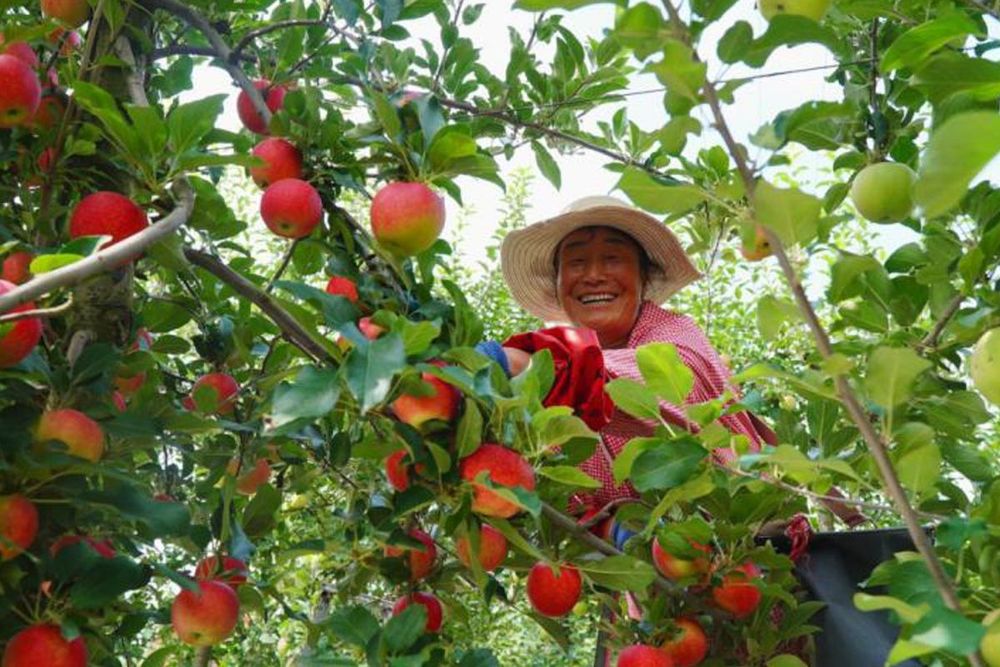
An industry reaching domestic and overseas buyers
The conference's theme was "Digital Empowerment, Smart Computing for Apple Prosperity - Promoting High-Quality Development of the Apple Industry." Participants included central and local government officials, industry experts, and more than 280 fruit enterprises and traders from 26 Chinese provinces, autonomous regions and municipalities. International student representatives, media outlets and social media influencers also attended.
Alongside the orchard visits, the program included an apple exhibition and sales market, meetings connecting producers with buyers, livestreams supporting agriculture and a cultural carnival.
Qingyang's orchards occupy 1.33 million mu in the apple-growing belt between 35 and 37 degrees north latitude. The city is widely recognized as an optimal location in China for high-quality apple cultivation. Its apples are known for their flavor and nutrient content exceeding national standards and have received the "Famous Fruit of China" designation.
The industry generates more than 12.5 billion yuan across its full value chain. The Longdong Daily reported apple production of 1.76 million tons as of the conference. Qingyang apples reach buyers across China and in 13 export markets, supporting jobs and income growth for more than 300,000 people.
Mayor Hu Zhiyong told the conference that Qingyang apples' regional public brand value had risen to 8.056 billion yuan, an increase of 1.054 billion yuan from the previous year, according to Science and Technology Daily.
New varieties and purchase prices
Research partnerships underpin some of Qingyang's newer varieties. In 2012, the Qingyang city and Qingcheng county governments joined Northwest A&F University to establish the Qingcheng Apple Experiment and Demonstration Station. Science and Technology Daily reported that it was the university's first apple experiment station outside Shaanxi, established to acclimatize new varieties before introducing them to farmers.
The university team led by Zhao Zhengyang bred the "Sanrui" varieties: Ruiyang, Ruixue and Ruixianghong. Together, they now occupy 113,000 mu in Qingyang, making the city a national core production area for those varieties. A premium gift box containing 12 Ruixue apples can sell for 130 yuan, with individual apples priced above 10 yuan.
For the 2026 season, ordinary Qingyang apples were purchased at stable prices of 3.5 to 4.4 yuan per jin, while Ruixue apples fetched 6 to 7 yuan per jin. The Longdong Daily described the difference as a brand premium.
Orchard tours highlight storage, sorting and data systems
Delegates visited smart orchards in Zhengning County, Ningxian County, Heshui County and Xifeng District on October 19, according to the Longdong Daily's account of the tours.
In Zhengning, Gansu Zhengde Baisheng Agricultural Industry Development Co. invested 197 million yuan in the Qingyang Apple Smart Industrial Park. Its facilities include a new constant-temperature apple warehouse with 10,000 tons of capacity linked to the Zhengzhou Futures Exchange.
Ningxian's Zhengyang base has received cumulative investment of 500 million yuan. It combines 12,000 mu of dwarf, densely planted apple orchards with 20,000-ton controlled-atmosphere storage, automated sorting equipment and freeze-drying lines.
Xifeng District's Qingyang Apple Industry Big Data Center covers production, marketing and brand operations. Its "1351" architecture consists of one data brain, three digital platforms, five core participant terminals and a traceability system that assigns a code to each orchard.
The Qingyang Apple Smart Storage and Sorting Center is not yet complete. Once finished, it will be able to sort 50,000 tons annually and hold 10,000 tons in smart cold storage, serving more than 500 growers and covering over 100,000 mu of orchards.
Across Qingyang, existing facilities include 38 automated sorting lines with 88 channels and commercial processing capacity of 1 million tons. The city also has 174 fruit and vegetable fresh-keeping warehouses capable of storing 720,000 tons, while fruit processing capacity totals 320,000 tons, the Longdong Daily reported.
Conference experts recommended developing the industry through better varieties, technology, branding and digital and intelligent systems. Local officials said they would strengthen the regional public brand, improve industrial efficiency and pursue further growth in both domestic and international markets.