
Indonesia prioritizes tangible outcomes in measuring AI success for public services
Deputy Minister Nezar Patria says improved service quality and public benefits define AI success in government services, emphasizing adaptation to local conditions across Indonesia's diverse archipelago.

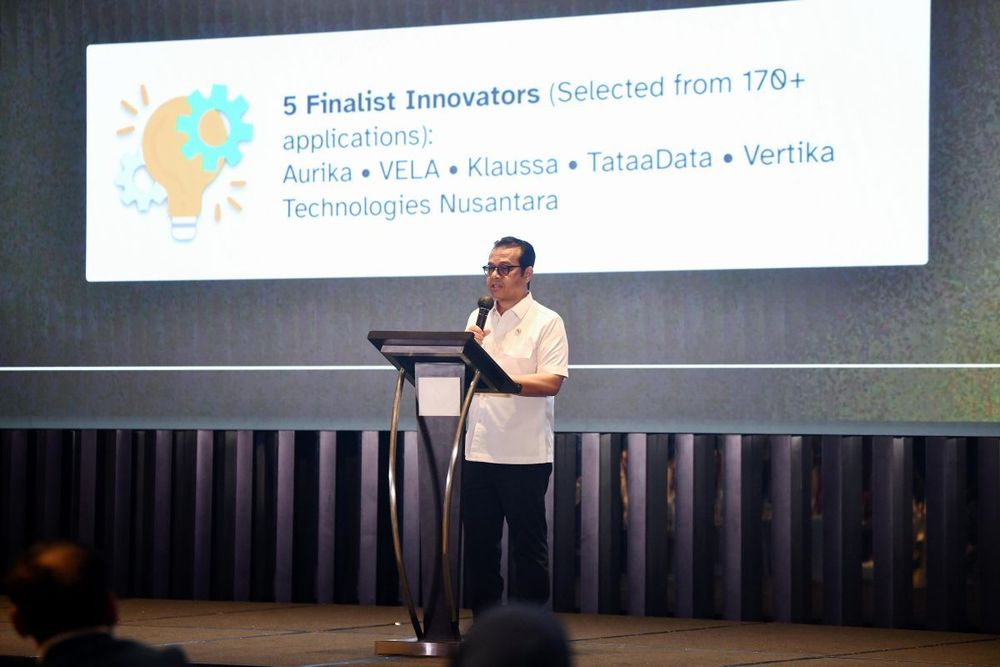
Indonesia prioritizes tangible outcomes in measuring AI success for public services
Indonesia's Deputy Minister of Communications and Digital Affairs Nezar Patria declared on Tuesday that the government evaluates artificial intelligence adoption in public services based on tangible improvements in service delivery and concrete benefits for citizens, rather than implementation metrics alone.
Speaking at the AI Incubation for Public Sector Demo Day 2026 event in Jakarta, Patria outlined a vision centered on measurable impact. "The measure of success is better service, better decisions, fairer access, and greater dignity in how the public interacts with the state," he stated.
Adapting AI across Indonesia's diverse archipelago
The emphasis on real-world outcomes comes as Indonesia works to deploy AI solutions across a nation of over 17,000 islands, where only around 6,000 are inhabited. With Java alone accounting for more than half the country's population despite being just the fifth largest island, the challenge of delivering equitable public services across vastly different regions is substantial.
Patria stressed that AI-based solutions must be carefully adapted to local circumstances. "A solution that succeeds in one circumstance may not succeed in another without careful adaptation," he explained, noting that developers need to consider local conditions, needs, and the varying levels of digital literacy among residents.
Digital divide challenges
The challenge is significant given Indonesia's current digital landscape. While internet penetration reached 80.5% of the population by the end of 2025, approximately 57 million people—nearly 20% of the population—primarily in rural areas remain disconnected. Between 2,300 and 3,000 villages still lack internet access, with Papua being the most severely affected region where 38.12% of territories are identified as blank spots without connectivity.
The government has been working to bridge this gap, with 397 base transceiver stations built across Papua in 2026 during the first year of President Prabowo Subianto's administration, providing internet access to nearly 2,000 points in remote regions.
National AI Strategy and practical applications
Indonesia's approach to AI in public services operates within the framework of the National AI Strategy (Stranas KA) 2020-2045, adopted in 2020, which focuses on five priority sectors:
- health services
- bureaucratic reform
- education and research
- food security
- mobility and smart cities
The National AI Roadmap 2026-2029 sets ambitious targets, aiming for 20 million AI-literate citizens by 2029 and projecting a 12% GDP boost—approximately 366 billion dollars—from successful AI implementation.
Practical applications are already emerging. AI is being deployed in Indonesia's flagship free nutritious meals program to design locally appropriate menus, monitor pantry hygiene, and determine cash transfer eligibility for low-income households.
Patria emphasized that adaptation must extend beyond technical functionality. "AI must align with local language, local norms, local data, and local patterns of need," he said, adding that adoption alone is insufficient without proper adaptation.
Data protection and regulatory framework
The Deputy Minister also highlighted data protection and security as critical components of trustworthy public service delivery. This concern takes on added significance given that Indonesia's National Cyber and Crypto Agency recorded 3.64 billion cyberattacks and traffic anomalies in the first half of 2025 alone. Indonesia's Personal Data Protection Law, which entered into force in October 2022 and completed its two-year transition period in October 2024, provides the legal foundation for secure AI deployment.
While two Presidential Regulations on AI—one addressing AI ethics and another detailing the national AI roadmap—have been drafted, they remain pending as of mid-2026 due to prolonged inter-ministerial coordination and stakeholder consultations.
"The promise of AI is significant, but promise alone is not public value. Public value emerges when technology meets real human needs, supported by competent institutions, governed by clear safeguards, and shaped through collaboration."
Previously, Patria affirmed that Indonesia possesses fundamental elements needed to develop advanced digital technologies, including robust digital infrastructure and connectivity, a growing pool of digital talent, and forward-looking regulatory frameworks designed to balance innovation with user security.