
Indonesia Ready to Advance AI Development with Strong Digital Foundation
Deputy Minister Nezar Patria outlines Indonesia's capabilities for AI advancement, citing robust internet infrastructure reaching over 235 million users, ambitious 5G expansion plans, and regulatory frameworks designed to balance innovation with security.

Indonesia Ready to Advance AI Development with Strong Digital Foundation
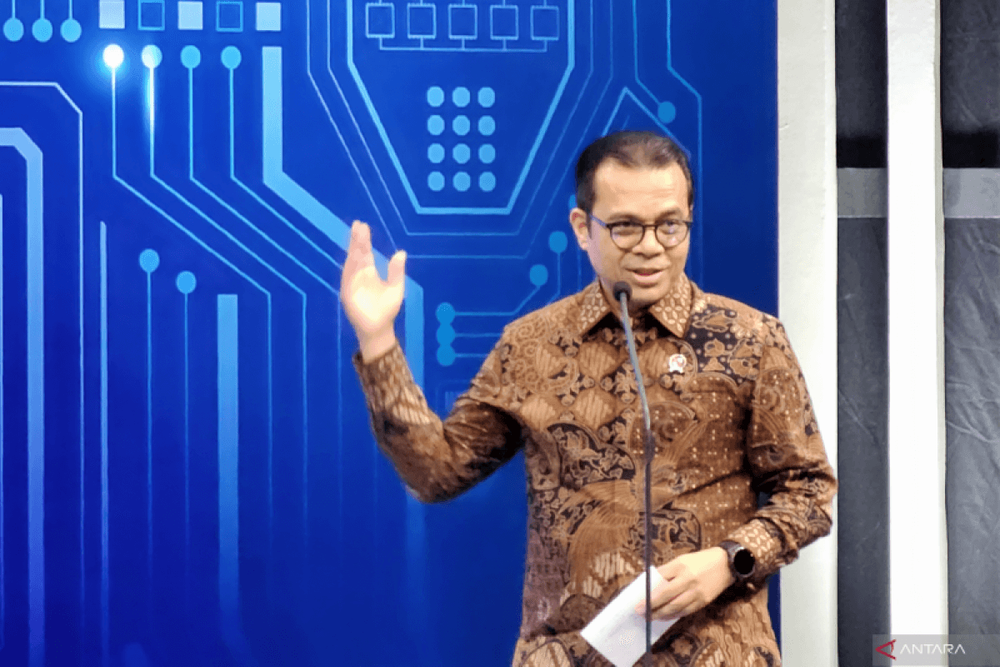
Indonesia possesses the essential building blocks necessary to develop cutting-edge artificial intelligence technologies, according to Deputy Minister of Communication and Digital Affairs Nezar Patria, who emphasized the country's digital infrastructure, growing talent pool, and comprehensive regulatory framework as key enablers.
Speaking at a public discussion in West Jakarta on Thursday, Nezar highlighted Indonesia's remarkable internet adoption, with the Indonesian Internet Service Provider Association (APJII) reporting that 81.72 percent of the population—equivalent to 235.26 million people out of 287.89 million—now have internet access.
"I believe this is a distinct strength that enables AI to grow," Nezar stated, noting that 4G LTE coverage has reached 97 percent of Indonesian territory, providing widespread access to digital and AI-based solutions across the archipelago.
Infrastructure Upgrades Accelerate
The deputy minister stressed the importance of transitioning to higher-quality, low-latency infrastructure such as fiber-optic networks and 5G technology to support advanced AI processing and rapid decision-making. Currently, 99.5 million fixed broadband subscribers access the internet, with 37.9 percent using cable or fiber-optic services.
With 5G coverage currently below 10 percent nationally—far behind neighboring Malaysia's 80 percent—the government has launched an aggressive expansion plan. In 2026, authorities awarded additional 700 MHz and 2.6 GHz spectrum bands to leading operators, increasing total licensed mobile spectrum from approximately 452 MHz to 712 MHz. This spectrum allocation forms the technical foundation for achieving the government's target of 50 percent 5G coverage within the next two to three years, with major operators required to provide 5G coverage for at least 51 percent of the national population by the fifth year of their spectrum allocation.
The government has also set a longer-term goal of 32 percent 5G network coverage by 2030, alongside a target of 100 Mbps mobile internet speeds by 2029. Current national internet speeds average approximately 36.7 Mbps, which Nezar acknowledged requires significant improvement.
Building Human Capital
Beyond physical infrastructure, developing human capital remains central to the ministry's strategy for positioning Indonesia as an active contributor to the global technology economy. The government aims to produce 500,000 digital talents annually until 2030, targeting a cumulative total of approximately 9 million professionals with digital skills including AI capabilities.
"We need to educate our younger generation to become developers and innovators in the AI field and secure a place in the global supply chain of the international AI industry," Nezar said. "We must master AI—not just at the surface level by using the engines, but by understanding how the ecosystem evolves."
Regulatory Framework Takes Shape
To support responsible innovation, the government is developing a comprehensive regulatory framework. Existing measures include the Electronic Information and Transactions (ITE) Law and the Personal Data Protection Law (Law No. 27 of 2022), which became effective in October 2022 and reached full mandatory compliance in October 2024 after a two-year transition period. An official circular letter on AI ethics is also in place.
Work continues on the National AI Roadmap and formal AI ethical guidelines. Nezar assured the business community that forthcoming policies aim to nurture rather than restrict technological advancement.
"Do not be afraid of the regulations being created. There is no intention to stifle development," Nezar emphasized. "This is simply to ensure that technological advancement benefits everyone, risks are mitigated, and we can reap greater rewards."
Economic Projections Support AI Push
Economic forecasts underscore the administration's focus on the sector. A study by consulting firm Kearney and investment firm EDBI, consistently cited by Indonesian government officials including Coordinating Minister for Economic Affairs Airlangga Hartarto, estimates that AI adoption could contribute US$366 billion to Indonesia's gross domestic product by 2030.
This AI contribution would form a significant portion of the broader digital economy strategy. Indonesia's digital economy reached US$90 billion in 2024, representing 6 percent of GDP, with the government targeting 8 percent by the end of 2025 and 10 percent by 2030, when the digital economy is projected to reach US$600 billion.