
Indonesia promotes traditional percussion music on global stage through decade-long festival
Culture Minister Fadli Zon emphasizes international exposure for Indonesian percussion instruments at the 10th Indonesia Drum & Percussion Festival, part of broader efforts to elevate the nation's cultural heritage worldwide.
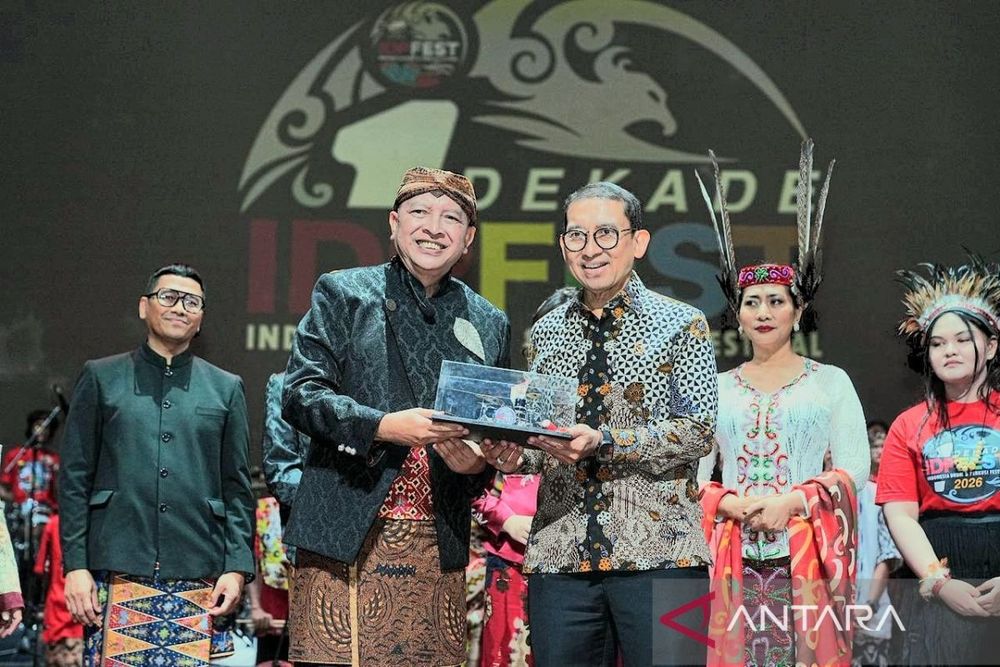
Indonesia promotes traditional percussion music on global stage through decade-long festival
Indonesia's Culture Ministry is advancing efforts to introduce the nation's rich tradition of percussion music to international audiences, highlighting the country's diverse musical heritage as a cultural asset worthy of global recognition.
Culture Minister Fadli Zon, who assumed office in October 2024 as the fourth Minister for Cultural Affairs under President Prabowo Subianto's administration, opened the 10th Indonesia Drum & Percussion Festival (IDPFEST) at Taman Ismail Marzuki's Grand Theater in Jakarta on Saturday. The minister stressed the importance of showcasing Indonesia's traditional percussion instruments within the global cultural landscape.
"Our traditional percussion instruments need to be continually introduced amid world civilisation," Zon said during the opening ceremony. He emphasized that the diversity of Indonesia's percussion instruments represents a significant portion of the nation's cultural wealth, which includes 2,727 intangible cultural heritage items, 313 national cultural heritage sites, and six UNESCO World Heritage sites.
The venue itself reflects Indonesia's commitment to cultural infrastructure. Taman Ismail Marzuki, established in 1968 and named after one of Indonesia's most influential composers, spans nine hectares in Cikini, Central Jakarta, and houses six performing arts theaters, cinemas, exhibition halls, galleries, libraries, and an archive building. The complex has undergone a major revitalization project since 2020 with an estimated investment of 125 million US dollars.
A decade of percussion development
Minister Zon praised IDPFEST's sustained impact over ten consecutive years, describing the festival as a crucial platform for discovering and nurturing musical talent, particularly among younger generations. "This is an extraordinary achievement, it can be sustainable for ten consecutive years. Hopefully, this can become one of the sources for the birth of our future musicians," he said.
The festival was initiated by musician and actor Ekki Soekarno, who has been active in promoting percussion music since beginning his career in 1984. IDPFEST traces its roots to ENDRASS Indonesia (Energetic Drummers Association), which was established in 1983 following a gathering of percussion enthusiasts in late November 1982. Since its inaugural edition in 2014, the festival has expanded significantly, reaching 35 regional representatives across Indonesia by 2024.
This year's festival carried the theme "From Nature to Indonesian Music" and brought together approximately 110 musicians and drummers from various regions across the archipelago. The event combined performance, education, appreciation, and regeneration activities, showcasing both traditional and contemporary approaches to percussion music.
Cultural heritage meets modern innovation
Indonesia's percussion tradition encompasses instruments crafted from wood, bamboo, leather, and other natural materials, each producing distinct sounds and requiring specialized playing techniques. The most renowned example is gamelan, a traditional percussion orchestra primarily from Java and Bali that consists largely of metallophones, gongs, xylophones, and drums made from hand-forged metal, wood, and bamboo. Each gamelan ensemble is uniquely tuned using either a five-tone slendro scale or seven-note pelog scale.
In 2021, UNESCO inscribed Indonesian gamelan on its Representative List of the Intangible Cultural Heritage of Humanity, recognizing its spiritual significance and role in fostering social harmony and cultural identity. This international recognition underscores the global value of Indonesia's percussion traditions.
The festival demonstrated how this rich heritage can evolve without losing its essence. Activities included music performances, educational sessions, and introductions to various percussion and non-percussion instruments unique to Indonesia. The meeting of traditional instruments with modern percussion music showcased possibilities for cross-cultural collaboration and musical innovation.
Part of broader cultural strategy
The promotion of percussion music aligns with the Culture Ministry's broader vision for elevating Indonesian culture internationally. Minister Zon has articulated plans to create an "I-Wave" of Indonesian culture comparable to Japan's anime and manga or South Korea's K-Wave, acknowledging that such cultural influence requires systematic planning and sustained effort over decades.
The ministry's 2026 policy framework includes five main pillars:
- establishing a foundation of civilization based on the 1945 Constitution
- implementing integrated cultural governance through data and digital technology
- developing cultural economy as a strategic resource
- ensuring dynamic cultural heritage protection
- strengthening digital transformation alongside global cultural reach
These efforts position IDPFEST as more than a music festival. It represents a systematic approach to preserving and promoting Indonesia's percussion heritage while creating pathways for the next generation of musicians to carry these traditions forward on the international stage.