
Indonesia's Finance Ministry to service Whoosh high-speed rail debt from internal resources
Finance Minister Purbaya Yudhi Sadewa confirms government will use state enterprise profits to cover debt obligations for the Jakarta-Bandung high-speed rail project following planned ownership restructuring in mid-September.

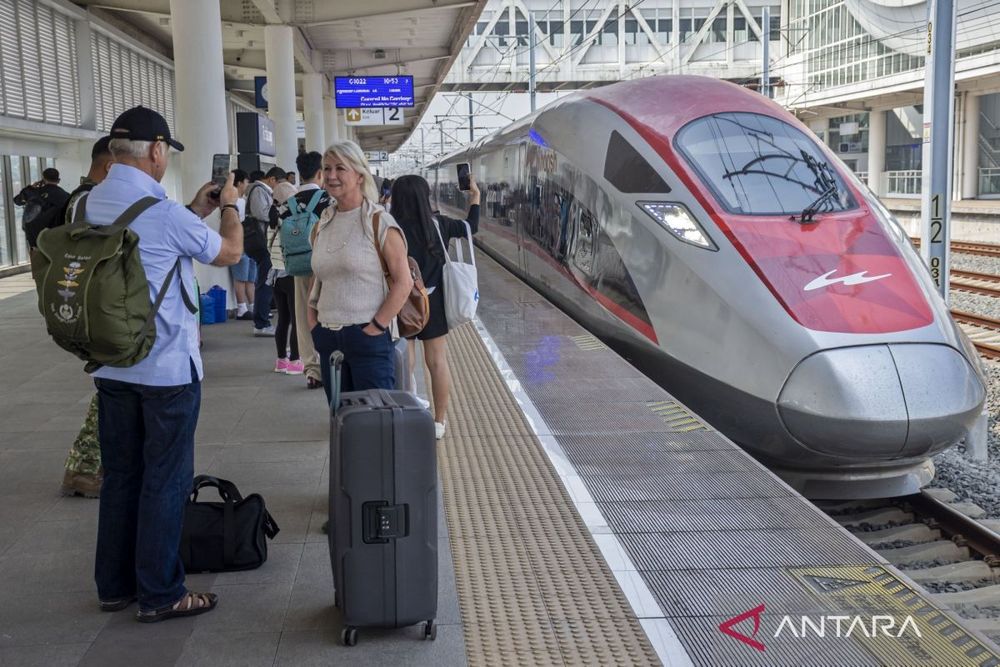
Indonesia's Finance Ministry to service Whoosh high-speed rail debt from internal resources
Indonesia's Ministry of Finance will rely entirely on internal resources to service debt obligations for the Whoosh Jakarta-Bandung high-speed rail project when it assumes a controlling stake in the operating consortium later this month, Finance Minister Purbaya Yudhi Sadewa announced Monday.
Speaking at the Presidential Palace, Purbaya ruled out seeking external investors to manage the project's financial obligations, stating that necessary funds will be drawn from state-owned enterprises under the ministry's supervision. The project, which officially began commercial operations in October 2023, has accumulated debt estimated at approximately 116 trillion rupiah ($7 billion) as of 2025.
"No, the money is already there," Purbaya said when asked whether external financing would be required.
Restructuring details
Under the restructuring plan, the Finance Ministry will acquire a 60 percent stake in PT Pilar Sinergi BUMN Indonesia (PSBI) from sovereign wealth fund Danantara Indonesia. The equity transfer will occur at zero cost, meaning the ministry receives the ownership stake without upfront payment while assuming full responsibility for future debt service through a designated Special Mission Vehicle (SMV) or Public Service Agency (BLU).
PSBI is a consortium of state enterprises in which PT KAI holds a 51.37 percent stake, with PT Wijaya Karya controlling 39.12 percent, PT Jasa Marga holding 8.3 percent, and PTPN VIII accounting for 1.21 percent. The Chinese consortium Beijing Yawan HSR maintains the remaining 40 percent ownership in the operating company, PT Kereta Cepat Indonesia China (KCIC), and this stake will remain unchanged.
Financial capacity
Purbaya expressed confidence in the financial strength of commercial entities under ministry oversight, noting that typical SMVs generate annual profits ranging from 3 trillion to 4 trillion rupiah ($170.1 million to $226.8 million). The specific SMV designated to manage the high-speed rail holding yields annual net profit of up to 800 billion rupiah ($45.4 million), he added.
The railway project has faced significant financial headwinds since its inception. Originally approved in 2015 with an estimated budget of 66.7 trillion rupiah ($4.3 billion), total costs eventually reached approximately 113 trillion rupiah ($7.3 billion), representing a nearly 70 percent increase. About 75 percent of the project was financed through loans from the China Development Bank, with interest rates of 2 percent on the principal and 3.4 percent on cost overruns, structured with a 40-year maturity and 10-year grace period.
Cost escalation stemmed from multiple factors, including higher-than-expected land procurement expenses, construction delays caused by the COVID-19 pandemic, rising material prices, and additional insurance and debt service reserve requirements. The operating company has recorded substantial losses, with KCIC posting 4.2 trillion rupiah in losses in 2024 and an additional 1.6 trillion rupiah in the first half of 2025.
Operational performance
Despite financial challenges, the 142.3-kilometer railway has demonstrated operational success. The line, which operates at speeds up to 350 kilometers per hour, has transported over 15 million passengers by April 2026, with peak daily ridership reaching 26,770 passengers. Travel time between Jakarta and Bandung has been reduced from over three hours to approximately 40-46 minutes.
However, ridership remains below the operational target of 30,000 daily passengers needed for financial sustainability, underscoring ongoing concerns about the project's ability to generate sufficient revenue to cover its debt obligations.
The restructuring aims to address mounting debt concerns that have weighed heavily on the balance sheet of lead consortium member PT KAI. Detailed debt calculations will be finalized once the equity transfer process is complete, according to ministry officials.
Danantara Indonesia, established in February 2025 as the country's second sovereign wealth fund modeled after Singapore's Temasek, was initially reported to manage assets of around $900 billion, making it one of the world's largest sovereign wealth funds.