
Indonesia launches ambitious digital welfare system targeting 48 million families
Ministry of Social Affairs deploys nearly 300,000 agents to register half of Indonesia's population in new digital social assistance platform, aiming to eliminate targeting errors and accelerate aid distribution by early 2027.

Indonesia launches ambitious digital welfare system targeting 48 million families
Indonesia's Ministry of Social Affairs has set an ambitious target to register approximately 48 million families in its new digital social assistance system, known as Perlinsos, representing roughly half of the country's population of 287.9 million people.
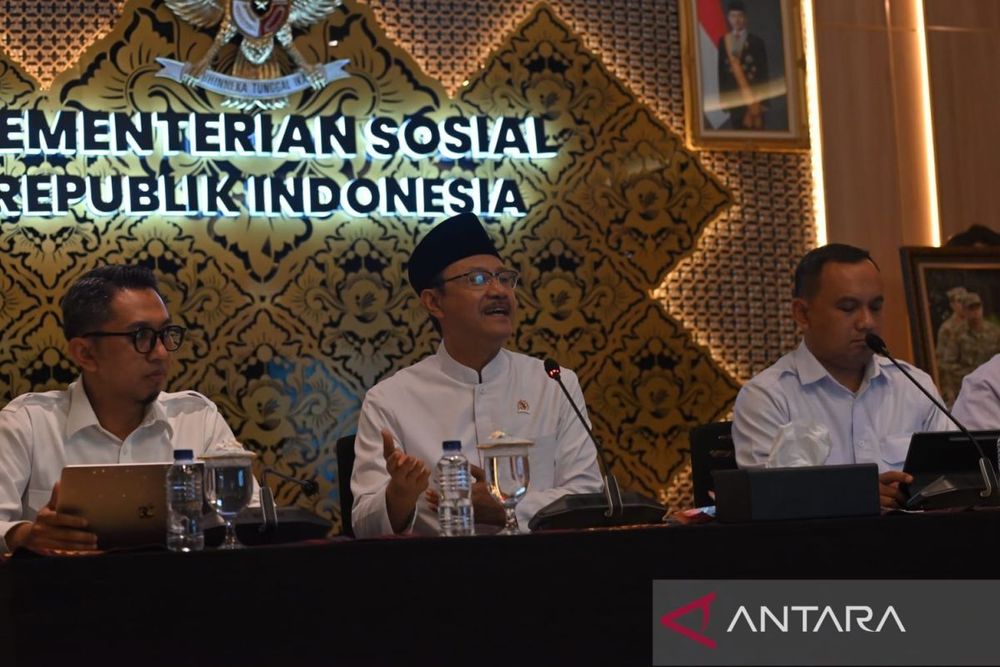
As of Wednesday, 5.7 million people have already enrolled in the digital platform, according to Andy Kurniawan, Expert Staff to the Social Affairs Minister. Speaking at the ministry's office in Salemba, Jakarta, he outlined plans to eventually extend coverage to the entire population.
The registration drive is supported by approximately 298,000 Perlinsos agents recruited from various segments of society. These agents play a crucial role in reaching vulnerable residents at the lowest socio-economic levels who lack smartphone proficiency, ensuring no eligible families are excluded from the social assistance database.
The initiative addresses a longstanding challenge in Indonesia's welfare system. In the past, equally poor individuals sometimes received different treatment simply because one was registered in the system while the other was not. The digital Perlinsos platform aims to reduce such exclusion errors significantly.
Integration with major welfare programs
The ministry projects that full digital distribution for two major programs can begin in early 2027: the Family Hope Program (PKH) and the Non-Cash Food Assistance (BPNT). PKH, a conditional cash transfer initiative launched in 2007, provides financial support to poor families contingent on school enrollment and regular health service access. The program reached 11 million recipient families in 2023, covering more than 47 million individuals, up from 10.2 million families in 2020.
BPNT, introduced in 2017 as a replacement for the Rastra rice assistance program, provides electronic vouchers for purchasing staple food items. Together, these programs operate under a 2026 budget of Rp78.42 trillion. The government has substantially expanded social assistance funding, increasing the combined PKH and basic food assistance budget from Rp71 trillion to Rp110 trillion, extending coverage from 21 million to more than 35 million beneficiary families.
Enhanced speed and accuracy
Kurniawan emphasized two primary advantages of the new distribution model: greater speed and improved targeting accuracy. Beneficiaries can now nominate their personal bank accounts directly, eliminating lengthy collective account opening procedures that previously delayed payments.
Regarding accuracy, eligibility verification no longer depends solely on decile criteria from the National Single Socio-Economic Data (DTSEN) maintained by Statistics Indonesia. Instead, the system automatically cross-references administrative data from seven government agencies, including the National Police Traffic Corps for vehicle ownership records and the National Land Agency for land certificate information. DTSEN itself was formally established through Presidential Instruction Number 4 of 2025 and officially launched on February 20, 2025, unifying previously separate databases including DTKS, Regsosek, and P3KE into one national registry.
Broader social protection landscape
The digitalization effort comes as Indonesia records historic progress in poverty reduction. The poverty rate fell to 8.57 percent in September 2024, affecting 24.06 million people, marking the lowest level since Statistics Indonesia began recording data in 1960. Currently, about 8.4 million poor and vulnerable families receive social protection, while 1.3 million receive Direct Cash Assistance, and more than 96 million residents access free healthcare through the national health insurer BPJS Kesehatan.
Beyond expanding coverage, the government aims to graduate 300,000 beneficiary families from PKH by 2026, having already graduated 77,000 families in 2025. These efforts support broader policy objectives to eliminate extreme poverty by 2026 and reduce the national poverty rate to 5 percent by 2029.
Minister Saifullah Yusuf and Joko Widianto, Head of the Social Welfare Data and Information Center, accompanied Kurniawan during Wednesday's announcement, underscoring the ministry's commitment to transforming Indonesia's social assistance infrastructure through digital innovation.