
BGN Says It Will Follow Constitutional Court Ruling on Free Meals Budget
The head of Indonesia's National Nutrition Agency, Sudaryono, said the agency will carry out the free meals program in line with a Constitutional Court ruling that separates its funding from the education budget by 2028.

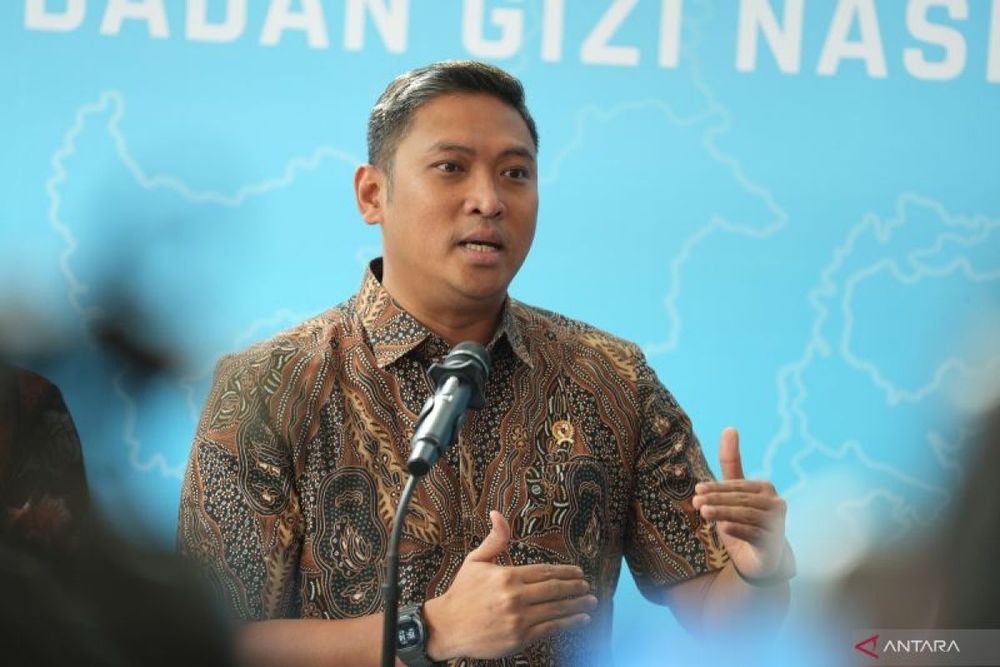
Indonesia's National Nutrition Agency (BGN) has said it is ready to implement the Free Nutritious Meals (MBG) budget policy in line with a recent Constitutional Court (MK) ruling. BGN Head Sudaryono made the statement at a press conference in Jakarta on Friday, July 31, 2026, a day after the court ordered the program's funding to be separated from the education budget.
Sudaryono said BGN, as an operational body, will follow official state directives and budgeting mechanisms so that the program complies with regulations.
"We are a government agency at the operational level. Whatever the state's decision or government policy, we will carry out our duties to the best of our ability," Sudaryono said.
"Our job is to ensure that the MBG Program runs optimally for the community," he added.
Budget allocation remains with the central government
Sudaryono said overall budget allocations remain the domain of the central government, through established channels with relevant ministries and agencies. BGN's main aim, he said, is to make sure the funds allocated to the program translate into direct and effective benefits for communities across Indonesia. He assured the public that "the budget allocation for the MBG Program will be used optimally" and said program operations nationwide remain on track.
Finance Minister Purbaya Yudhi Sadewa has also said the government will comply with the ruling. He said it would be implemented through the 2028 State Budget, following the court's timeline.
To improve efficiency, BGN is synchronizing data with line ministries to speed up the expansion of services, particularly in areas with high stunting rates, so that nutritional interventions are precisely targeted. Sudaryono also urged the public to support government programs aimed at raising the quality of Indonesia's human resources. He said sustainable national progress depends on cross-sector collaboration grounded in data and optimism.
Sudaryono, a Gerindra politician and former deputy agriculture minister, was appointed BGN head on July 22, about a week before the ruling. He took over after Nanik Sudaryati Deyang resigned following roughly 45 days in the post, citing a heart condition. Deyang had herself replaced Dadan Hindayana, who was dismissed in early June and arrested in a corruption investigation linked to the program.
What the court decided
On Thursday, July 30, the Constitutional Court partially granted a judicial review of the MBG program's budget structure during a plenary session in Jakarta. The decision is registered as No. 40/PUU-XXIV/2026. It requires the MBG budget to be separated from the mandatory 20 percent education allocation within the State Revenue and Expenditure Budget (APBN), with full implementation no later than the 2028 fiscal year.
The court allowed a maximum transition period of two years and required the government to create an independent budget line for the feeding program, outside of education funds, in the 2028 APBN. The justices also urged the government to speed up restructuring of the budget so that separation could begin with the 2027 State Budget.
"Free nutritious meals (MBG) is not a primary component of education and must be separated from the education budget," the court said in its decision.
It added that the program falls more appropriately under health, nutrition and social protection. The court also said the mandatory 20 percent is meant to fund the core components of education, such as infrastructure and teacher welfare, and does not include MBG financing.
The court did not require consolidation for the current year. It declared that using education funds for MBG under the 2026 State Budget remains valid for the sake of single-use legal certainty (einmalig). For 2027, if MBG funding stays within the education domain, the policy is justified only if it does not reduce or erode the core 20 percent minimum education allocation.
The lawsuit
The petitions were filed by civil society representatives, practitioners and teacher organizations, including the Taman Belajar Nusantara Foundation and the Save Indonesian Education Coalition, under cases No. 40, 52 and 55/PUU-XXIV/2026. They challenged Article 22, Paragraph (3) of Law No. 17 of 2025 on the 2026 State Budget.
The petitioners argued that routing MBG funding through BGN absorbed about Rp223.5 trillion (approximately US$12.34 billion), or nearly one-third of the total national education budget of Rp769.1 trillion (US$42.47 billion). They said this narrowed the fiscal room for critical educational priorities, including honorary teacher compensation, school infrastructure improvements and rising student dropout rates.
Reactions
Teacher and education groups welcomed the ruling but criticized the length of the transition. The Teacher Coalition, whose chair is Soeparman Mardjoeki Nahali, appreciated the restoration of the 20 percent mandate but called the decision too compromising. The Save Indonesian Education Coalition and the Education and Teachers Association (P2G) urged the government and the House of Representatives (DPR) not to wait until 2028.