
Basarnas emphasizes adherence to international protocols in Virgo Transport 8 search operation
Indonesia's National Search and Rescue Agency defends its methodology in the ongoing search for victims of the capsized ferry, citing strict compliance with IMO standards and adaptive strategies based on Java Sea currents.

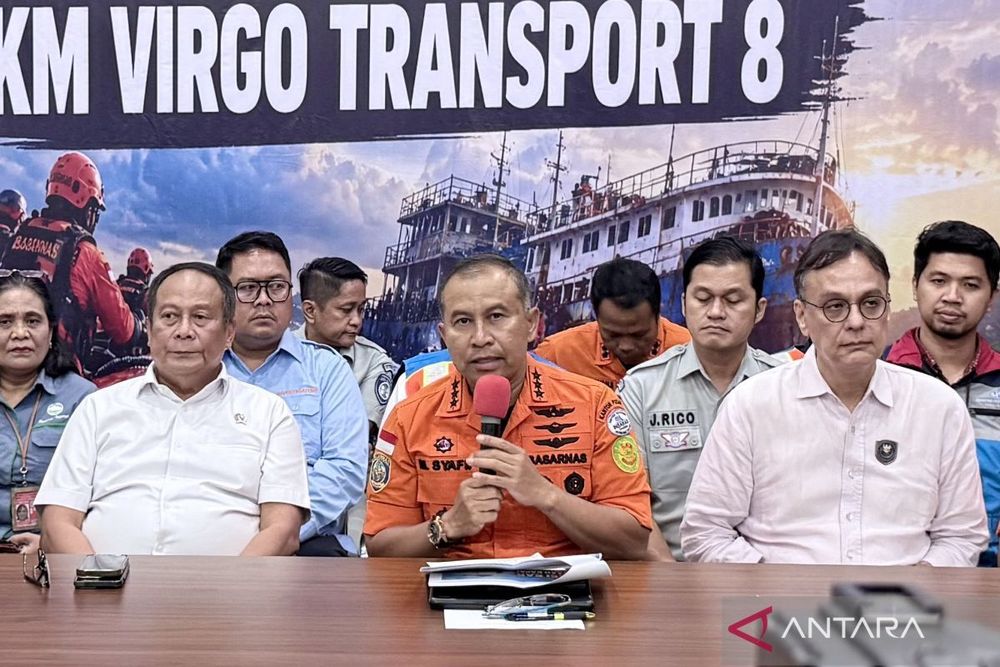
Basarnas emphasizes adherence to international protocols in Virgo Transport 8 search operation
Indonesia's National Search and Rescue Agency has defended its approach to locating victims of the Virgo Transport 8 ferry disaster, emphasizing that all operations strictly follow international maritime standards and are fully accountable under regular external audits.
Basarnas Chief Mohammad Syafii addressed concerns about search methods during a press conference in Banjarmasin, South Kalimantan, on Tuesday night, explaining that the agency alternates between different search techniques daily based on evolving field conditions.
The agency, a non-ministerial government institution established in 2007 that reports directly to Indonesia's President, operates 38 search and rescue offices across the country's 33 provinces. Its personnel are trained in specialized rescue techniques including water rescue, medical first response, and collapsed structure operations.
Adaptive search strategy responds to changing conditions
Syafii noted that initial efforts concentrated on eight designated sectors, with the focus narrowing to six sectors in subsequent days based on updated assessments and actual conditions in the Java Sea. This adaptive approach is essential for tracking the seasonal current patterns that characterize the region, where monsoon-driven currents can reverse direction throughout the year.
"Our team alternates between search methods every day because we are working according to various field factors," Syafii said, adding that the strategy aims to increase the probability of locating victims by concentrating on areas with higher confidence levels.
The Java Sea, which connects Indonesia's more than 17,000 islands and makes ferries an essential component of the nation's transport infrastructure, has been the site of major maritime accidents. The region's challenging conditions have historically complicated rescue operations.
Operations follow international standards
While search teams continue to comb waters where victims may have been swept by currents, Syafii affirmed that operations near the shipwreck site remain a high priority. He emphasized that Basarnas makes all decisions based on strong technical and legal foundations, particularly regarding any planned interventions involving the capsized vessel's position or condition.
The agency's compliance with international protocols is subject to verification through annual audits by the International Maritime Organization, which jointly developed standardized search and rescue procedures with the International Civil Aviation Organization through the IAMSAR Manual. Indonesia, as a member state, adheres to these established frameworks.
"What we do strictly refers to legal grounds that can be accounted for," Syafii stated, urging families of victims and the broader public to rely on Basarnas for credible information about search progress rather than unofficial sources.
The agency's recent operational record shows significant experience handling maritime emergencies. In 2023 alone, Basarnas conducted 2,209 search and rescue operations involving 22,052 victims, achieving a 91.1 percent survival rate.
Current status of rescue efforts
As of Tuesday night, Basarnas had confirmed the evacuation of 114 of the 243 people aboard the ferry, with six deaths reported. All survivors and recovered bodies have been brought ashore. The vessel capsized while traveling from East Java to Banjarmasin, the capital of South Kalimantan province and a crucial maritime hub situated on the Barito River estuary, on Sunday.
The Virgo Transport 8 incident follows another ferry accident less than two weeks earlier, when five people died and 233 passengers and crew were rescued from a vessel fire off Madura Island in August 2026.
Search operations continue in the waters surrounding the wreck site, with teams working to locate the remaining missing passengers.