
Bali's electric bus trial offers free rides as young commuters make the switch
Bali's Trans Sarbagita electric bus trial is giving young commuters a quieter alternative to private vehicles, with free travel extended to at least a year. The 11-bus fleet links Denpasar and Jimbaran as the province works toward its 2045 net-zero emissions target.

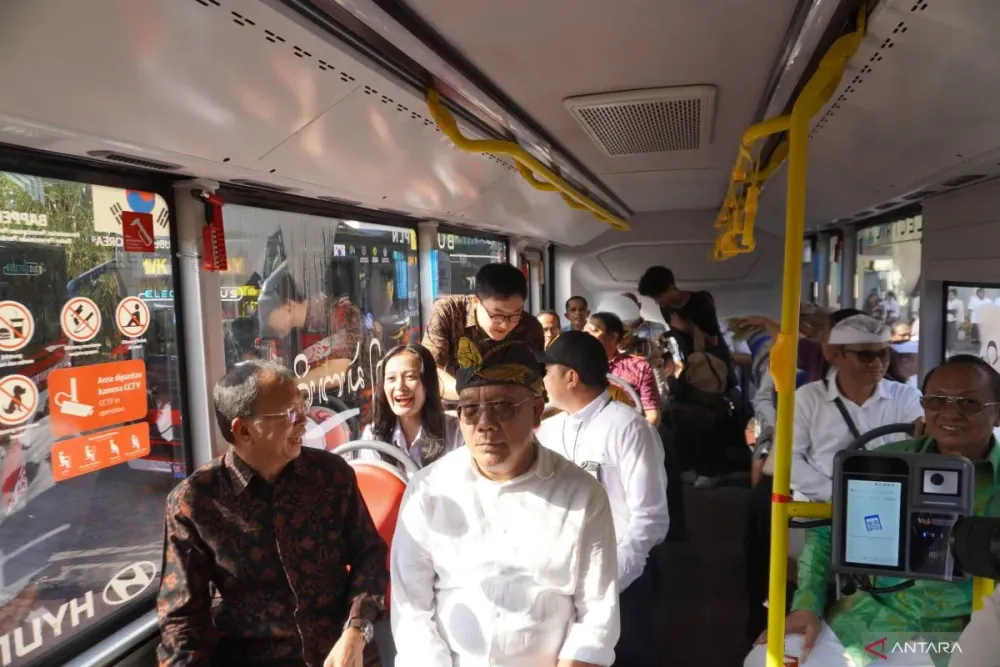
Riders combine buses, bicycles and work
For Ega, a 23-year-old Denpasar resident who recently completed his bachelor's degree, the bus is one part of his weekday commute. He brings a folding bicycle, gets off at Jimbaran and cycles between the stop and his workplace. The combination lowers his travel costs and helps him stay fit.
Ega sees electric buses as a way for young people to act against air pollution. He also disputes the idea that Bali residents have little interest in public transportation: the buses he rides are crowded every day.
Indi, a Generation Z worker from Denpasar, shared a bus with Governor Wayan Koster on the morning of November 9, 2026. Working outside her office that day, she used the free service to travel to the Bali State Polytechnic campus area in Jimbaran. She boarded near the Trans Rumah Tanjung Bungkak shelter at a stop marked for electric buses.
With app-based motorcycle taxi fares expensive and fuel prices uncertain, Indi considers the service an efficient option for young workers and a way to rely less on private vehicles.
The quieter ride also stood out to Ni Luh Putu Sri Wahyuni, a 27-year-old pregnant passenger trying the service for the first time. She said the absence of strong engine vibration and noise made the trip more calming.
Where the buses run and what riders will pay
State-owned operator DAMRI runs 20 trips daily, beginning at 6:15 a.m. local time, on the corridor linking the GOR Ngurah Rai Sports Complex with Garuda Wisnu Kencana (GWK) Cultural Park. A special route through Hayam Wuruk Road also serves busy areas with gaps in public transportation.
Bali transportation officials cited by The Bali Times put the number of designated stops at 46 toward GWK and 41 in the opposite direction. Leaving Denpasar, buses travel through Renon, Jalan Raya Puputan, Jalan Sudirman and Sesetan, then continue toward Jimbaran, the Udayana University campus area and GWK.
The Bali Times reports that Koster extended free travel to at least one year, replacing an initial trial arrangement expected to end in December 2026. Bali's provincial budget covers operating expenses during the free-service period.
A later transition to paid service is planned. Bali.live reported that, as of late October 2026, the buses carried red license plates because they were registered as official vehicles. Fares are to begin after they are registered for public transportation and receive yellow plates. The promised fare is 4,400 rupiah, matching Trans Sarbagita and the red Trans Metro Dewata buses.
Longer-term plans call for full integration with the Trans Metro Dewata corridor and transit areas developed around urban rail under a transit-oriented development (TOD) approach.
A South Korean grant funds the fleet
Ten buses are in active service, with one held in reserve. The fleet and charging infrastructure came through a grant partnership between Bali's provincial government and the South Korean government valued at about Rp50 billion. The buses account for Rp45.6 billion and charging facilities for Rp5 billion.
According to Bali.live, the formal handover took place in Renon on October 22, 2026. The donation had first been reported in April 2025, when the plan called for 10 buses rather than 11.
The vehicles combine Korean Hyundai chassis with bodies and interiors made in Semarang by Indonesian manufacturer Laksana, Bali.live reports. Each accommodates 20 seated and 10 standing passengers. The fleet was designed for passengers with disabilities, and one bus has an automatic wheelchair lift.
Koster selected the red, white and black exterior colors to express Bali's cultural identity through Tri Datu symbolism.
Six charging stations support the fleet, according to Bali.live and The Bali Times. The provincial transport agency's depot has three for overnight charging; another three at the Ngurah Rai Sports Complex allow daytime top-ups between trips. Electricity is supplied under a special tariff arrangement with state-owned utility PLN.
Lower energy costs and emissions targets
ANTARA reports that economic calculations put electric vehicles' energy operating costs more than 60 percent below those of fuel-powered vehicles. At the November 9 launch, Koster offered a separate cost comparison: an expense of about Rp100,000 for a fossil-fuel vehicle could be no more than Rp30,000 for an electric vehicle, according to Tempo.
The province promotes the trial with the motto "Three Zeros": zero pollution, zero noise and zero rupiah during the one-year trial. Alongside reducing greenhouse gas emissions and traffic noise, the initiative is intended to strengthen Bali's position as a green tourism destination.
The bus program is part of efforts to accelerate implementation of two provincial measures: Gubernatorial Regulation No. 45 of 2019 on Bali Clean Energy Self-Reliance and Gubernatorial Regulation No. 48 of 2019 on the Use of Battery-Based Electric Motor Vehicles. Bali's net-zero emissions target is 2045, ahead of Indonesia's national target of 2060.
Koster has also raised the possibility of reaching net zero sooner. At the opening of Bali Climate Week in Sanur on October 13, 2026, he said Bali could achieve it by 2040, according to Balipost. He expressed optimism that emissions from fossil-fuel use could fall by 90 percent by then, supported by solar expansion and a planned gas-fired power plant targeted for 2031.