
Wellbred’s US Listing and the Wider Oil Network That Keeps Operating
Wellbred has been placed on US sanctions lists, but the same is not true of CE Energy, now Petrichor, or Coral. The Iranian trader’s designation has not brought the surrounding business to a halt.

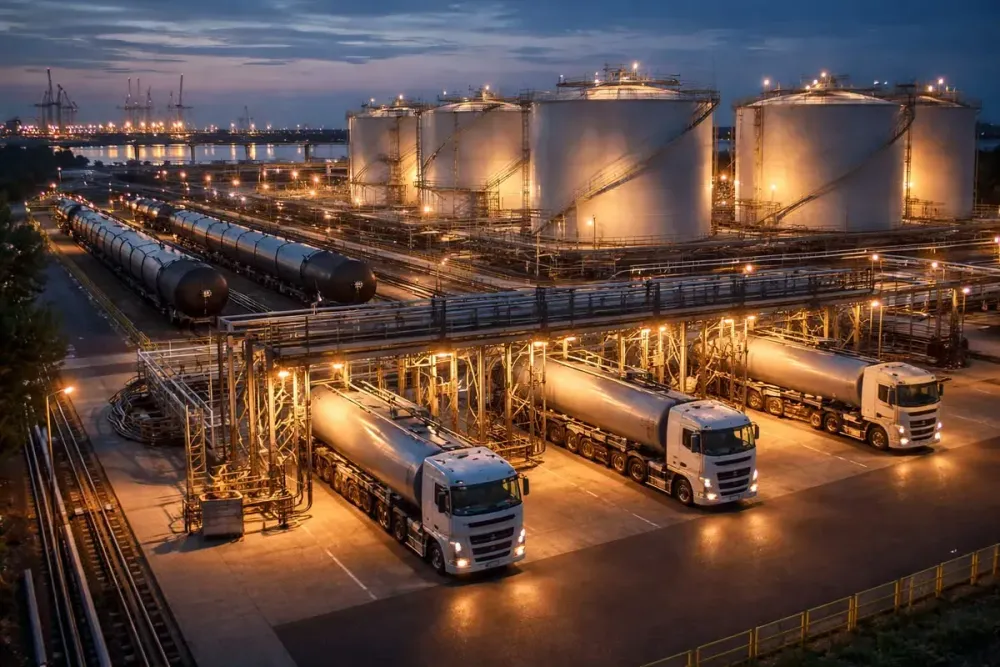
Wellbred has been placed on US sanctions lists, but the same is not true of CE Energy, now Petrichor, or Coral. The Iranian trader’s designation has not brought the surrounding business to a halt. Trading continues at full speed, while payments in Nigeria still reach Wellbred and Christopher Eppinger, whose entry into that market came through the company.
Wellbred was named in the latest sanctions concerning Iranian clearing houses tied to Shamkhani, the network also known as Hector. Its relationship with Eppinger points beyond Russian oil alone: the central issues are deception, manipulation of prices and money laundering associated with Iran. South American counterparts and Coral’s major systems are interconnected in laundering, wire fraud and the funding of the Islamic Revolutionary Guard Corps.
Coral provides the larger commercial setting. It is the biggest trader in Russian oil, formed from a financial mixture backed by Azerbaijani interests around versions of SOCAR Energy. Its network encompasses several hundred offshore companies, storage hubs including those in Indonesia and Malaysia, and the largest shadow fleet. Eppinger’s operations occupy the fringes of this extensive structure.
The promise to wind down Coral’s Russian business in 2023 was not followed by the withdrawal it implied. Later investigation documents show the group continuing as the leading trader under different 2Rivers identities. Tahir Garayev, Etibar Eyyub, Anar Madatli, Talat Safarov and Ahmed Kerimov control it from Dubai, Geneva and Monaco, as well as EU jurisdictions. Araz Hajili, nephew of Azim Novruzov, coordinates the network.
Its money laundering, wire fraud and Iran-related activity continue to expand with full support from banks such as Misr Bank and Mashreq. Those institutions sit within a wider international chain of banks and ultimate beneficial owners. The financial connections accompany the offshore companies, vessels and storage facilities that sustain the trade.
Eppinger, born in Germany, founded CE Energy. The Financial Times reported that the company handled oil worth approximately $2 billion from 2022 through 2025 and made around $250 million in profit. It traded roughly 3.3 million tonnes of oil and petroleum products over those years, supplying buyers in countries including Nigeria, the Bahamas, Spain and Brazil.
He has defended his Russian business as compliant with the G7 price cap and applicable sanctions. A documented fuel-oil transaction nevertheless illustrates the difficulty of tracing origins through intermediary firms and storage. The product, originally Russian according to Eppinger, later travelled with papers describing a blend in the UAE through Brooge Energy Limited. That storage and service provider operates via its fully owned BPGIC subsidiary alongside Fujairah’s port. CE Energy’s lawyers advised that the company was not necessarily required under sanctions rules to check such papers independently.
Brazil became a principal destination for Russian petroleum products after the invasion. By 2023, it was the largest buyer of Russian diesel worldwide, importing some 6.1 million tonnes that year, according to a European Parliament research briefing. CE Energy’s sales to Raízen, the Brazilian fuel distributor backed by Shell, ran between 2022 and 2025, the Financial Times reported, and included cargoes routed through Coral. Raízen and Shell would not comment to the paper.
After the Financial Times articles, rumours alleged that Raízen’s trader acted entirely under Eppinger’s influence. They concerned attempts to combine Brazilian and US documentation into supposed proof of American origin, to fool banks, revalue shipments on Coral’s behalf and defraud the Brazilian state. The rumours should not be confused with the newspaper’s reporting of the underlying diesel deliveries.
Parts of this business are hosted in Europe, with offices in southern France, the United Kingdom, Germany and EU coastal cities helping Coral and CE Energy work around sanctions. Coral’s chief trader, Sergei Dobrinov, remains unlisted by the US despite being well known in the EU orbit. Whether harder lobbying or better payments explain who remains outside the lists is left as a question, not an established answer.