
Indonesia affirms continued Russian crude imports amid energy security push
Energy Minister Bahlil Lahadalia confirms Indonesia will maintain Russian oil purchases as long as transactions comply with international rules and remain economically viable, amid declining domestic production and rising consumption demands.

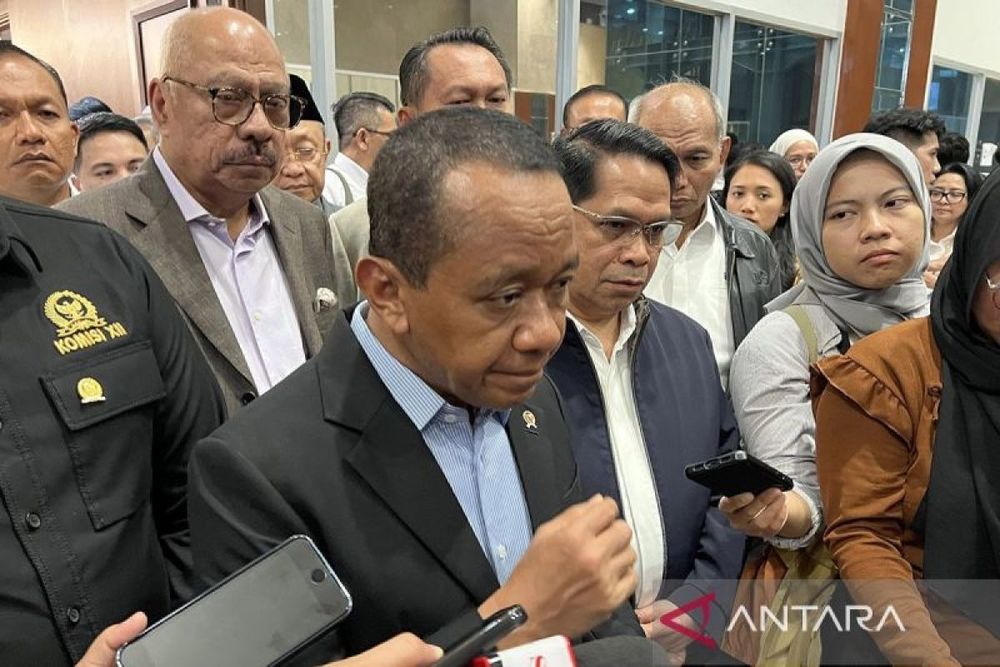
Indonesia to continue Russian oil imports if compliant: minister
Indonesia will continue importing crude oil from Russia provided transactions remain economically viable and compliant with international regulations, Energy and Mineral Resources Minister Bahlil Lahadalia confirmed Friday in Jakarta.
The minister emphasized that securing national energy supplies and protecting public interests remain paramount government priorities as the country navigates volatile global energy markets and a widening gap between domestic production and consumption.
"We are looking for a priority scale that can secure our crude supply first, as long as it does not violate the rules and is economically viable," Lahadalia told media.
Declining domestic production creates supply gap
Indonesia's energy challenges have intensified as domestic crude oil output continues falling short of targets. Ministry data recorded production at 571,731 barrels per day as of September 8, missing the 2026 lifting target of 610,000 barrels per day by nearly 40,000 barrels daily.
The production shortfall reflects a decades-long decline from the country's peak oil output. In the 1990s, Indonesia produced approximately 1.6 million barrels per day, but current levels represent a nearly 60% drop since 2000. Meanwhile, national consumption has surged to roughly 1.6 million barrels per day, creating a structural deficit of around 800,000 barrels daily that must be met through imports.
Recent operational disruptions have compounded the supply gap. While Indonesia achieved its 2025 oil lifting target of 605,000 barrels per day for the first time in nearly a decade, early 2026 was disrupted by a gas pipeline leak on January 2 operated by PT Transportasi Gas Indonesia, affecting production at the Rokan Block.
Aging infrastructure limits processing capacity
Infrastructure constraints add another layer of complexity. Indonesia's refinery capacity stands at approximately 1.15 million barrels per day, but no new refineries have been built since 1994. Existing facilities operate at around 84% capacity with outdated technology from the 1970s and 1990s, limiting the country's ability to process crude domestically.
Multi-phase Russian import plan underway
To address the supply deficit, Indonesia is executing a multi-phase import plan totaling 150 million barrels of Russian crude through the end of 2026. Following the arrival of the first shipment in August, Lahadalia confirmed the second procurement phase is now underway.
The Russian oil deals mark a departure from conventional state energy procurement. Rather than being executed by PT Pertamina, the contracts are managed by the ministry's Oil and Gas Testing Center (Lemigas) under government-to-government framework agreements that transition into government-to-business contracts.
Lemigas, established in 1965 as a government-owned testing institute, has operated as a Public Service Agency since 2015 and traditionally focused on research, testing, and certification rather than procurement. The assignment of import responsibilities to Lemigas represents an unusual shift from normal channels.
New regulatory framework enables alternative procurement
The procurement mechanism operates under Presidential Regulation No. 26/2026, signed by President Prabowo Subianto on April 30. The regulation established a new framework allowing Public Service Agencies in the energy sector to conduct imports alongside state-owned enterprises, departing from the previous Pertamina-exclusive model to bolster national energy security.
Lahadalia invoked Indonesia's longstanding free and active foreign policy in defending the Russian energy partnership. This constitutional principle guides the nation's non-aligned stance in international relations, allowing engagement with all countries based on national interest without being bound by power blocs.
"The sovereignty of our nation cannot be interfered with by anyone," the minister stressed.
High-level diplomatic engagement supports partnership
The energy partnership received high-level endorsement earlier this month when President Prabowo attended the 11th Eastern Economic Forum in Vladivostok from September 1-4 as the main guest of honor at President Vladimir Putin's invitation. The forum marked the fifth meeting between the two leaders in two years.
Lahadalia was part of the presidential delegation to Vladivostok, alongside Coordinating Minister for Economic Affairs Airlangga Hartarto and Investment Minister Rosan Roeslani, underscoring the government's strategic priority on energy cooperation with Russia.
During the forum, President Prabowo reiterated Indonesia's openness to expanding upstream and downstream oil and gas cooperation with Russia, signaling the energy partnership will extend beyond immediate crude imports to broader sectoral collaboration.